
Views: 0 Author: Site Editor Publish Time: 2026-11-15 Origin: Site


Saltwater environments represent the ultimate stress test for electrical storage systems. High salinity, constant vibration, and moisture ingress will rapidly destroy standard batteries. Premature battery failure at sea is not just an inconvenience. It creates a critical safety hazard. Boaters lose navigation, communication, and vital bilge pump function. Buyers often over-index on raw capacity while under-evaluating environmental durability. We will help you navigate this complex purchasing decision. You will learn how to evaluate enclosure integrity and anti-corrosion engineering. We will also explore the intelligent protections required for reliable saltwater operation. Choosing the right power source ensures your vessel remains safe and functional in harsh conditions. A high-quality Marine Battery provides peace of mind far from shore. Let us explore exactly what makes a storage system truly ready for the ocean.
A true marine battery requires an IP67 or higher enclosure rating; "water-resistant" is insufficient for saltwater applications.
Corrosion resistance must extend beyond external terminals to include conformal-coated internal circuitry and marine-grade hardware.
An advanced Battery Management System (BMS) is non-negotiable for safety, protecting against thermal runaway, short circuits, and moisture-induced faults.
Upgrading to a LiFePO4 marine battery significantly reduces weight and increases usable capacity, but requires verifying compatibility with existing marine alternators and chargers.
Standard batteries die quickly at sea. Three main factors cause this rapid destruction. Salt fog infiltrates tiny crevices. High-impact hull vibration shakes internal components without mercy. Galvanic corrosion aggressively attacks exposed metals. Boaters frequently underestimate how aggressive saltwater mist truly is. It coats everything in a highly conductive microscopic layer.
Saltwater acts as a highly conductive electrolyte. It accelerates galvanic corrosion between dissimilar metals. You see this most often on battery posts and ring terminals. The metal literally eats itself over time. It causes severe voltage drops. These voltage drops force your alternators and chargers to work twice as hard. Eventually, the connection fails entirely, leaving you completely without power.
Wave pounding also causes internal structural failure. Traditional lead-acid batteries suffer from internal plate shedding. Heavy shocks break the delicate lead grids suspended in the acid. Shock-absorbing internal designs are mandatory for longevity. They prevent sudden internal shorts. When a lead plate snaps and touches another inside the casing, the battery dies instantly.
Compromising on quality brings severe operational risks. You might lose GPS navigation during a sudden squall. Your bilge pump could fail when taking on water. Cheap batteries require replacement every one to two seasons. It creates endless frustration and hidden expenses. You spend more time troubleshooting electrical gremlins at the dock. You spend less time actually enjoying the open water.
You must understand IP ratings before buying. IP65 means splash-proof. It is not enough for the ocean. IP67 and IP68 mean submersion-rated. IP67 serves as the absolute baseline for saltwater use. It ensures dust cannot enter and protects against temporary immersion in water up to one meter deep. If your bilge floods temporarily, an IP67 unit survives.
Housing materials matter greatly. Ruggedized, UV-resistant ABS plastic is standard. Heavy-duty polycarbonate casings perform even better. They resist cracking under high impact from dropped tools or severe wave slamming. They also handle extreme thermal expansion perfectly. Engine rooms get incredibly hot, while winter storage brings freezing temperatures. You want a shell that bounces back from physical and thermal abuse.
Sealing technologies stop salt fog completely. Manufacturers use several advanced construction methods. Ultrasonic welding fuses plastic halves together seamlessly without mechanical fasteners. Marine-grade rubber gaskets compress under heavy bolts to form airtight seals. Epoxy-sealed lids permanently lock out moisture. These methods prevent airborne salt fog from reaching delicate internal cell pouches or cylindrical cells.
Consider venting versus sealed units. Traditional vented boxes allow dangerous hydrogen gases to escape during charging. However, they also let corrosive salty air inside. Fully sealed enclosures solve this two-way street problem. Sealed lithium architectures reduce maintenance dramatically. They eliminate explosive vapor risks in enclosed, poorly ventilated bilges. You never have to top off fluids or clean acid spills. They provide a far safer, cleaner environment for your vessel.
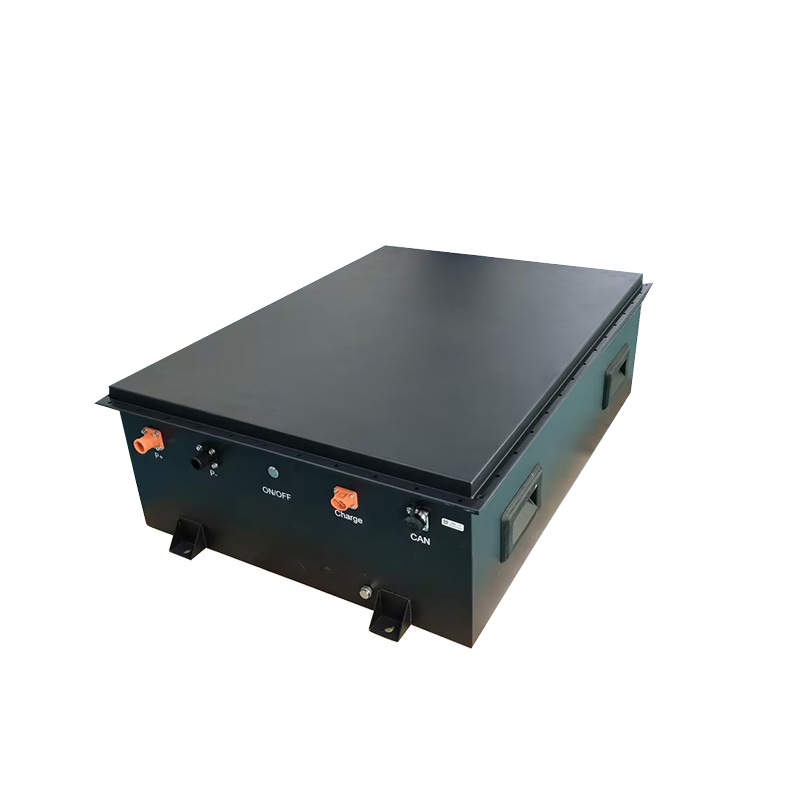
External hardware needs specific metallurgy to survive. Tinned copper stands as the premier standard for terminal posts. The tin coating prevents rapid oxidation of the underlying copper. You should also look for marine-grade 316 stainless steel bolts and washers. These materials stop that familiar green fuzzy corrosion from forming. They ensure maximum power delivery without dangerous voltage drops or heat generation at the terminal.
Internal protection is equally crucial but often invisible. Conformal coating acts as a vital secondary shield. Manufacturers spray this clear protective chemical layer directly over internal circuit boards. It stops condensation and salt-laden air dead in its tracks. Minor enclosure breaches occasionally happen due to extreme pressure changes. Conformal coating ensures trace moisture does not short out the delicate microprocessors running the system.
Cell connections require heavy-duty engineering. Constant vibration easily shakes standard threaded fasteners loose. Laser-welded cell connections offer superior durability because they fuse the metal permanently. Heavy-duty bolted busbars also work well if secured with high-torque locking nuts. They resist corrosion-induced electrical resistance. These connections keep heavy currents flowing even in rough chops. Solid connections prevent excessive heat buildup and eliminate potential fire hazards within the battery case.
A generic Battery Management System (BMS) fails frequently on boats. It cannot handle high-humidity fluctuations inherent to the marine environment. Prolonged vibration causes standard circuit board traces to crack. A marine-specific BMS resists these exact harsh conditions. It runs flawlessly without false faulting, even when mounted near powerful, vibrating diesel engines.
Critical cut-offs keep your vessel fundamentally safe. Over-voltage protection stops dangerous alternator charging spikes. Under-voltage protection prevents dead banks that leave you stranded. Over-current protection stops sudden short circuits from destroying the wiring harness. Low-temperature charging protection proves especially vital. You need this feature for winter marine storage. It stops the charger from pushing current into frozen lithium cells, which permanently ruins them.
High continuous discharge capacity is completely necessary. Trolling motors pull heavy amps for hours on end while fighting currents. Windlasses draw massive electrical spikes during heavy anchor retrieval. Modern heavy house loads, like gyroscopic stabilizers and induction cooktops, demand steady power. The BMS must handle this sustained current draw safely. It must do so without overheating its own components or shutting down unexpectedly.
Moisture-sealed electronics guarantee survival. The BMS board itself must be fully potted. Manufacturers encapsulate the entire circuit board in solid, thermally conductive resin. This stops short circuits entirely. If trace moisture enters the outer casing through a damaged seal, the resin blocks it from reaching the silicon. The electronic brain of your power system remains perfectly dry and functional.
Battery chemistry dictates baseline performance and vessel dynamics. A LiFePO4 Marine Battery vastly outperforms traditional AGM (Absorbent Glass Mat) technology. Lithium Iron Phosphate cuts battery weight by up to 60%. This massive weight reduction improves boat draft, fuel economy, and top-end speed. It also allows a true 100% depth of discharge capability without damaging the internal cells. You get perfectly flat voltage curves until the bank is nearly empty. Fish finders, radar, and VHF radios run stronger for much longer.
Feature | AGM (Absorbent Glass Mat) | LiFePO4 (Lithium Iron Phosphate) |
|---|---|---|
Weight per 100Ah | ~65 lbs | ~25 lbs |
Usable Capacity | 50% (to prevent damage) | Up to 100% |
Voltage Curve | Gradual drop during discharge | Flat and stable until empty |
Cycle Life | 300 - 500 cycles | 3,000 - 5,000+ cycles |
Standard sizing requires careful physical planning. You must choose the right footprint for your specific hull layout. Group 27 sizes fit perfectly in smaller bays or tight center consoles. They serve exceptionally well as dual-purpose units for smaller outboard skiffs. Group 31 sizes offer maximum amp-hour capacity in a standard marine footprint. They work best for dedicated deep-cycle house banks on larger cruising vessels. Measure your existing battery trays carefully before ordering.
Scalability matters significantly for larger vessels. Building a multi-battery Yacht Battery Pack requires precise wiring rules and careful capacity matching. Series wiring works seamlessly for 24V or 36V electric trolling motor systems. Parallel wiring builds massive 12V house banks capable of running air conditioning off-grid. You must understand BMS cell-balancing limitations when linking multiple units. Always use identical batteries from the exact same manufacturing batch. This ensures perfectly even charging and discharging across the entire bank, maximizing overall lifespan.
You need a clear, actionable plan before finalizing your purchase. Let us review the critical implementation checklist.
Verify Charging System Compatibility: Check your existing shore power chargers immediately. Ensure your solar charge controllers have dedicated lithium profiles. Standard marine alternators often burn out when charging high-acceptance lithium directly. You may require specialized DC-DC chargers or alternator regulators to protect your engine's electrical system from overheating.
Scrutinize Warranty Exclusions: Read the fine print carefully before swiping your card. Look for warranties that explicitly cover marine and saltwater use. Avoid budget brands that hide behind vague "water damage" or "corrosion" void clauses. A good warranty reflects the manufacturer's genuine confidence in their enclosure sealing and internal potting techniques.
Confirm Physical Fit and Mounting: Measure your current battery tray dimensions accurately. Check your tie-down strap compatibility. Lithium units often require tighter strapping because they are lighter and bounce more easily. Determine if you need primary cable gauge upgrades. Lithium batteries deliver higher sustained power than lead-acid. Thicker marine-grade tinned cables prevent dangerous heat buildup in your wiring harness.
Upgrading your marine power system fundamentally transforms your boating experience. It requires strict attention to technical detail. Follow this checklist to guarantee a seamless, safe, and highly efficient installation process.
Surviving a saltwater environment requires a comprehensive, holistic approach. You cannot rely on a single protective feature to save your electrical system. You need rugged IP-rated enclosures to stop initial water ingress. You need specialized corrosion-resistant metallurgy to maintain strong electrical conductivity. You also need an intelligent, potted BMS architecture to manage heavy power flows safely. Marginal upfront cost savings on cheap batteries frequently lead to catastrophic failures far from shore. Prioritize long-term reliability and uncompromising safety at sea over budget pricing. A properly specified marine power system is a foundational investment in overall vessel safety. It guarantees your navigation, communication, and critical bilge systems run exactly when you need them most. Invest wisely, upgrade your wiring, and enjoy the open water with absolute confidence.
A: No. Car batteries use thinner lead plates designed only for quick starting bursts. They break down rapidly under constant marine hull vibration. They also lack deep-cycle capabilities, meaning they will permanently degrade if you run them down to power your boat's electronics.
A: Yes. You must use a charger with a specific lithium charge profile. Lithium batteries require distinct voltage parameters during the bulk and absorption phases. A standard lead-acid charger may undercharge the unit or trigger the internal BMS to shut off prematurely.
A: Starting batteries deliver short, high-amp bursts to crank marine engines. Deep cycle batteries provide steady, continuous power over many hours. You use deep cycle units for electronics, lighting, and trolling motors. Using the wrong type will severely shorten its lifespan.
A: Standard lead-acid or AGM units typically last between two and four years in harsh saltwater conditions. However, a well-maintained LiFePO4 battery can last more than ten years. This longevity stems from its exceptionally high cycle life and fully sealed, corrosion-resistant design.
A: No. While plastic battery boxes protect against direct splashing and physical impact, they are rarely airtight. They do not prevent salt fog condensation from entering the box. This airborne moisture will quickly corrode the internal components of a standard non-marine battery.


