
Views: 0 Author: Site Editor Publish Time: 2026-05-19 Origin: Site


Walk into a small print shop on a busy afternoon and the problem is easy to see. One customer wants a family photo on black cotton. Another sends a logo with a very specific red. Someone else needs a soft gradient across a hoodie front. Jobs like these are not impossible on a basic printer, but they do expose the weak spots of a simple four-color setup. Skin can look dull. Greens can go muddy. Smooth fades can turn into bands. This is where commercial direct to garment printing with a wider ink set starts to make sense.
A six-color DTG machine should not be treated as a magic upgrade. It will not fix bad artwork, poor pretreatment, or rushed curing. What it can do is give a shop more room to reproduce difficult colors and smoother detail. For shops that sell photo shirts, brand merchandise, creator drops, or short-run retail apparel, that extra room can be the difference between “good enough” and something a customer is willing to reorder.
The real question is not whether six colors sound better than four. Of course they do. The harder question is whether the machine fits your workflow, your staff, your order volume, and the amount of maintenance you are willing to handle every week. That is the part buyers sometimes skip.
A six-color setup can improve reds, greens, skin tones, and gradient work, but the printer is only one part of the result. Loading time, pretreatment, curing, humidity, and daily cleaning all affect profit. It is also worth looking at hybrid DTG/DTF capability if your shop handles polyester blends, sleeves, bags, or awkward print locations.
Four-color CMYK is still useful. Plenty of local orders can be printed that way without complaints. The limits show up when the artwork becomes more demanding. A portrait may lose warmth around the face. A brand color may drift just enough for the client to notice. A fade from red to orange may look less smooth than it did on screen.
Six-color printing helps fill those gaps by adding extra channels, often red and green or lighter color variants. A modern DTG printer uses those added channels to widen the printable color range. In normal shop language, that means brighter graphics, cleaner faces, and fewer harsh dots in soft areas.
Resolution is another area where buyers should slow down. A large DPI number looks impressive, but it does not tell the whole story. What matters is how the printhead places ink on real fabric. Variable droplet control is helpful because the machine can put down heavier ink where the design needs strength and smaller amounts where the artwork needs softness. That balance is what keeps a print sharp without making the shirt feel stiff.
Ink choice is just as important. Water-based garment inks are common because they can leave a softer feel than heavier decoration methods. On dark shirts, white ink does the hard work. It sits under the color layer and stops the fabric color from swallowing the design. When the white layer is weak, even the best color channels will not save the print.
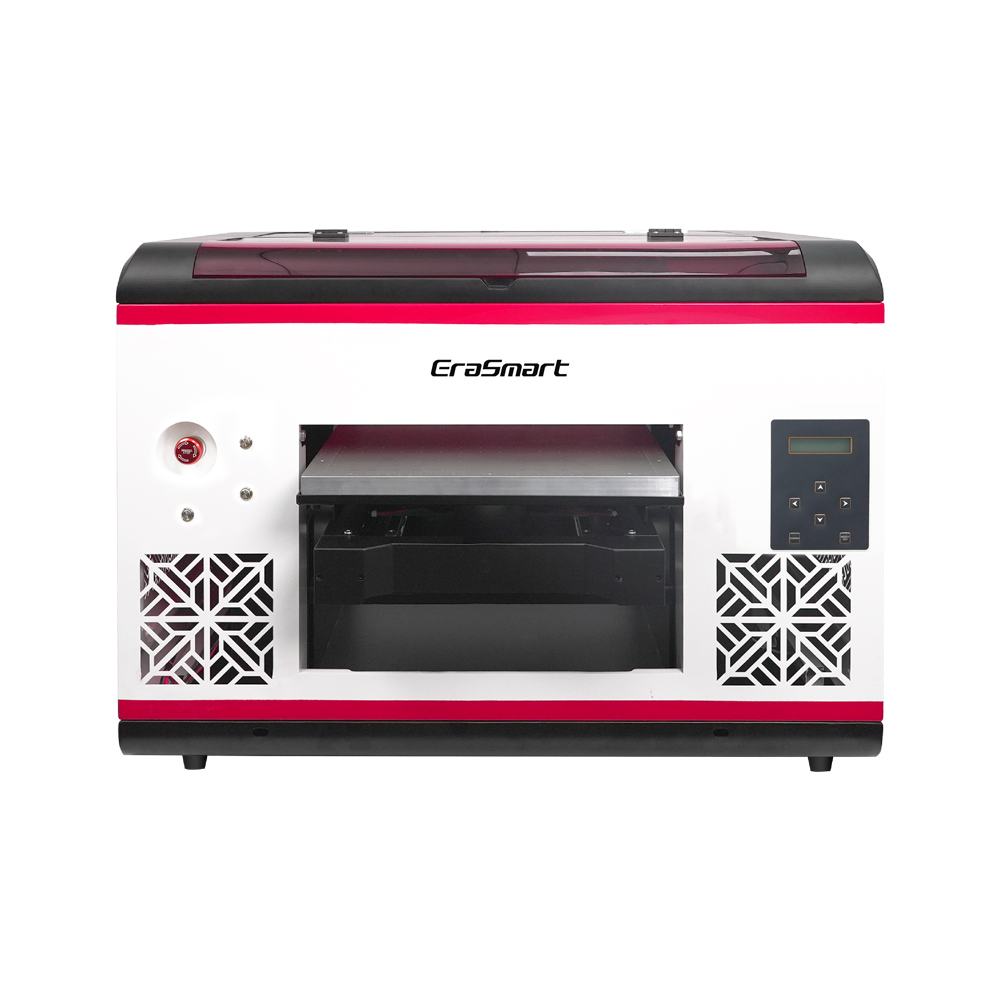
Many buyers ask about print speed first. That is normal, but it can be misleading. In day-to-day production, the operator is not only waiting for the printhead. They are loading shirts, flattening seams, checking placement, swapping platens, unloading finished pieces, and preparing the next job. A printer that looks fast in a demo can still feel slow during a real batch.
Take platen loading. A hoop-and-tuck setup can easily take half a minute per shirt if the operator is careful. A vacuum platen can pull the garment flat much faster. On one shirt, the time saved is not dramatic. On a school order, a merch drop, or a 1,000-piece run, it becomes a serious labor difference.
Platen Technology | Approx. Loading Time | Time for 1,000 Shirts | What It Means in Practice |
|---|---|---|---|
Traditional Hoop & Tuck | About 35 seconds | About 9.7 hours | More handling, more fatigue, and slower repeat batches |
Vacuum Platen System | About 10 seconds | About 2.7 hours | Faster loading and more consistent fabric placement |
This is why a commercial T-shirt printer should be judged as a production station, not just as a print engine. Ask how quickly an operator can change a platen. Check whether the height adjustment is easy to repeat. Run a nozzle check. Load a wrinkled shirt. Try a real job file instead of a perfect demo image.
Layering also affects throughput. Some machines lay down white, pause, and then print color. Others reduce that movement. A few seconds saved on one shirt may not matter. On repeat work, it does. Small delays become visible when staff members are trying to finish orders before pickup.
Hybrid use is worth considering as well. A garment printer that can also support DTF-style output gives a shop more ways to handle polyester blends, tote bags, sleeve prints, neck labels, and placements that are simply annoying to print directly on the garment.
The least exciting part of DTG ownership is usually the part that decides whether the printer makes money. White ink contains heavy pigment. Let it sit too long and the pigment settles. Once that happens, clogs are not far behind. Overspray and ink mist can also collect around belts, sensors, capping stations, and encoder strips. A neglected clothing printer rarely fails politely. It usually starts with small nozzle issues, then turns into downtime at the worst possible moment.
Before buying, look for features that make maintenance less dependent on one careful employee. Wet capping helps stop nozzles from drying during idle time. White ink circulation or agitation keeps pigment moving. Automated cleaning routines can clear small issues before they become expensive ones. Mist control or air filtration helps keep the inside of the machine cleaner.
Even with those systems, a shop still needs habits. Keep the room humidity around 45% to 60% when possible. Run nozzle checks before production, not after something already looks wrong. Wipe the capping station and wiper blades. Clean the encoder strip on schedule. None of this is glamorous, but it is cheaper than replacing a printhead or explaining a delayed order to a customer.
A fabric printing machine should fit current orders and realistic growth. Buying too small creates bottlenecks during busy seasons. Buying too large can leave you paying for features that sit idle most of the week. Neither mistake feels good after the invoice is paid.
Business Stage | Typical Workload | What to Focus On |
|---|---|---|
Testing / Start-up | Samples, local custom jobs, small online orders | Lower risk, simple maintenance, and dependable support |
Growing Shop | Daily production and repeat customers | Vacuum platen, stronger white ink management, faster job changeover |
Commercial Production | Large runs, staff operators, stricter color expectations | Six-color output, uptime protection, service planning |
DTG is not equally friendly to every shirt. Cotton is usually the easiest material. Polyester and blends can be less predictable because of ink behavior and dye migration. Some shops handle those jobs better with DTF support. Dark garments add another layer of work because pretreatment must be even. If it is sprayed poorly or cured unevenly, the print can look patchy even when the printer itself is working fine.
Curing deserves the same attention. A shirt can look good when it comes off the platen and still fail after washing if heat, pressure, or dwell time is wrong. Before taking a large order, run a basic test: print, cure, stretch, wash, and inspect. It is much better to find a weak process during sampling than after the customer has paid for a full batch.
A six-color high-resolution DTG printer can raise the quality ceiling for a growing print shop. It is most useful when customers care about portraits, gradients, brand colors, and a softer retail feel. Still, the best purchase is not always the machine with the biggest resolution claim. Look at garment loading, pretreatment workflow, white ink management, platen design, hybrid flexibility, maintenance access, and service support. Those details decide whether the printer becomes a reliable profit center or another machine that operators quietly avoid.
Dark garments usually need pretreatment so the white underbase can bond properly. Light cotton shirts may need less, depending on the ink, fabric, and wash expectations.
With proper pretreatment and curing, DTG can perform well for retail apparel. Screen printing may still be stronger for some large bulk jobs, but DTG is often the better choice for full-color short runs.
Some machines can, but results vary. Polyester often works better with DTF or a hybrid workflow because ink behavior and dye migration are harder to control.
It holds the garment flatter, shortens loading time, and helps keep wrinkles or raised fabric away from the printhead.


