
Views: 0 Author: Site Editor Publish Time: 2026-05-18 Origin: Site


A hand-powdered DTF workflow can work in the beginning. You print a few sheets, shake TPU powder in a tray, cure the transfer, and press it later. The process is manageable when the order volume is low. Once the printer starts producing long rolls, however, manual powdering becomes the slowest and messiest part of the shop.
That is the point where a commercial DTF powder shaker becomes more than an accessory. It turns powder application, excess powder removal, curing, and take-up into one continuous line. When paired with suitable film printing equipment, it helps the shop keep output steady without assigning someone to shake film all day.
This guide explains when to automate, how to compare shaker configurations, and which facility details should be prepared before installation.
An automatic shaker improves adhesive consistency and can reduce powder waste through recycling systems.
Horizontal shakers usually support faster curing, while vertical models save floor space.
Commercial DTF lines often need controlled humidity, ventilation, and dedicated 220V electrical service.
Film tension control, backward feeding, and temperature tuning help prevent jams, curling, and wasted transfers.
Manual powdering is not just slow. It is inconsistent. One area may receive too much TPU powder while another receives too little. Too much powder creates rough edges and a heavy hand feel. Too little powder can cause peeling after washing. A mechanical shaker applies powder more evenly and removes the excess in a controlled way.
The upgrade point usually appears when a shop moves into 17-inch or 24-inch roll-to-roll DTF printing equipment. A desktop sheet printer can be managed by hand for a while. A roll printer cannot be stopped every few feet so someone can powder and cure the film manually. If you stop too often, the printhead sits idle, ink begins to dry, and production rhythm breaks.
A commercial powder shaking machine also helps control mess. Loose TPU dust is not something you want floating around printheads, guide rails, or staff breathing zones. A closed shaker body with recycling and filtration keeps more powder inside the process instead of on the floor.
Horizontal units feed the printed film straight through the powdering chamber and a longer heating tunnel. Because the heat path is longer, these systems are better suited to high-speed roll output. The trade-off is space. You need a long, clean line behind or in front of the printer.
Vertical machines fold the film path through a stacked design. They are easier to fit into a smaller shop, garage, or tight production room. The shorter curing path means you may need to slow the printer slightly so the adhesive fully melts before take-up.
Match the shaker to your printer speed, not just to your available floor space. If the printer can output more film than the shaker can cure, the entire line must slow down. That is not always bad, but it should be planned before purchase.
Configuration | Space Need | Curing Path | Best Use |
|---|---|---|---|
Horizontal | Longer linear footprint | Longer heating tunnel | High-volume production |
Vertical / Compact | Smaller floor footprint | Shorter heating zone | Medium-volume or space-limited shops |
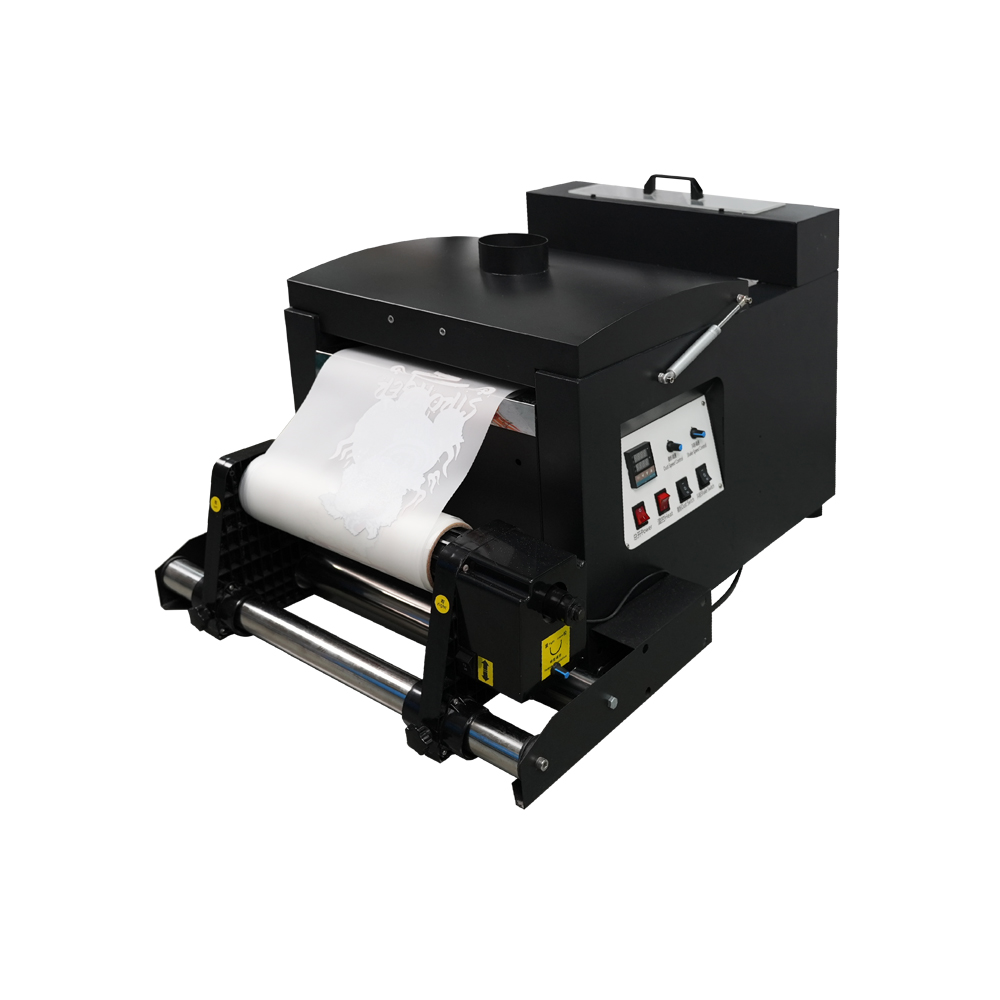
Powder recycling: A good unit should reclaim unused powder and return it to the hopper. Manual scooping wastes time and creates more dust.
Film tension sensors: Motorized rollers and sensors help prevent film from stretching, snapping, or bunching up inside the machine.
Curing design: The DTF oven section should melt powder thoroughly without overheating the PET film. Dual-zone heating can reduce edge curl and oily adhesive spread.
Ventilation and filtration: Heated TPU powder releases fumes. Choose a machine with a filter system or an exhaust port that can connect to proper ventilation.
Small desktop equipment may run from normal household power. Larger shakers often do not. Industrial units with heating tunnels may require 220V/30A or higher dedicated circuits. Bring in an electrician before delivery, not after the breaker starts tripping.
DTF is sensitive to room conditions. Keep humidity around 40–60% RH when possible. Low humidity increases static, which makes powder cling to areas with no ink. High humidity can make powder clump inside the hopper. A stable temperature, roughly 65–80°F, also helps ink viscosity and powder flow stay predictable.
Condition | Recommended Range | Why It Matters |
|---|---|---|
Humidity | 40–60% RH | Controls static and prevents powder clumping |
Temperature | 65–80°F | Keeps ink and powder behavior stable |
Ventilation | Filtered or exhausted air path | Reduces fumes and airborne TPU dust |
Some operators feed a small amount of film backward during setup so the leading edge sits correctly before the run begins. This can reduce waste at the start of the roll and helps prevent early misalignment. It is a small habit, but it saves material over time.
Do not trust the display blindly. Use test transfers and, when possible, a surface thermometer to confirm curing behavior. Under-cured powder looks rough and may fail wash testing. Overheated film can warp, oil out, or become difficult to handle.
The vibration system should remove loose powder without knocking adhesive away from the ink. Fine text and thin lines are good test patterns. If they lose powder or become ragged, adjust vibration, film speed, or powder flow before running paid orders.
A DTF powder shaker is one of the clearest upgrades for a shop moving from sheet-based production to roll-to-roll output. It saves labor, improves adhesive consistency, reduces powder waste, and keeps the workspace cleaner. The right model depends on printer speed, available floor space, electrical capacity, ventilation, and climate control. Plan those details first, and the shaker becomes part of a smoother production line instead of another machine fighting for attention.
Most commercial shakers include a curing oven section. You may still keep a small oven for testing or sheet work, but roll production usually runs through the shaker’s heating tunnel.
Control humidity, reduce static, use proper film, and tune powder vibration. Low humidity is one of the most common reasons powder clings where it should not.
Empty or recycle excess powder, clean powder buildup, check rollers, inspect filters or exhaust paths, and confirm that the film path is free of residue before the next run.


