
Views: 0 Author: Site Editor Publish Time: 2025-12-26 Origin: Site


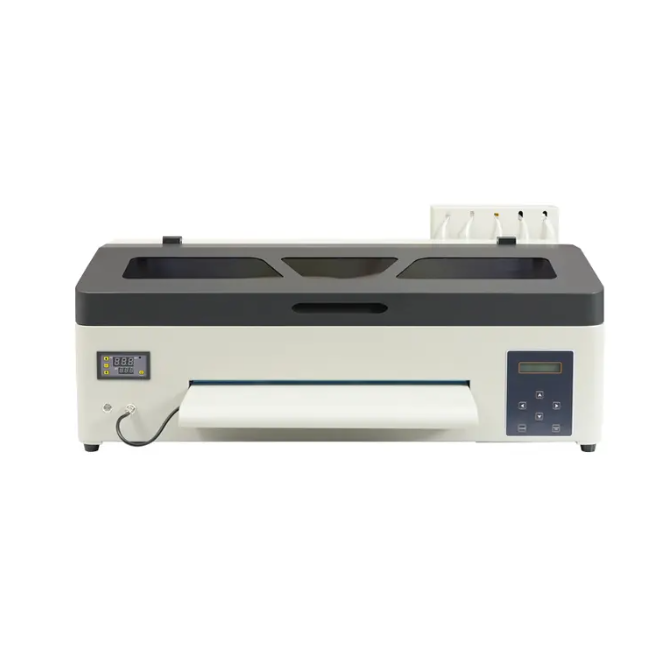
If you’re into printing your own custom clothes — like T‑shirts, hoodies, hats, tote bags, or just random apparel designs — you’ve probably heard of DTF printing. DTF stands for Direct to Film, and honestly, it’s been kind of a big deal in the custom apparel world because of how easy and flexible it is.
Basically, DTF printing lets you take a design you make on a computer, print it onto a special film, and then use a heat press to stick it onto fabric. It works on cotton, polyester, blends, and a bunch of other materials — which is wildly cool because you don’t need super complex gear or mad technical skill to do it.
But here’s the question that always gets thrown around: “What’s the biggest size a DTF printer can actually print?” Like, is there some massive printer that can print blankets, full banners, or super large designs, or are we all stuck with small little T‑shirt prints?
In this article, we’re gonna break down all the common DTF printer sizes — including the smallest ones like A4 all the way up to the big commercial ones — and help you figure out which size actually makes sense for your project or business.
When you start shopping for a DTF printer, you’ll notice they come in a bunch of different sizes. Think of it like picking a phone: a tiny one, a medium one, a big one — each is good for different things.
Here are the most common sizes you’ll see:
A4
A3
A2
A1
Each one is meant for different types of printing jobs and business goals.
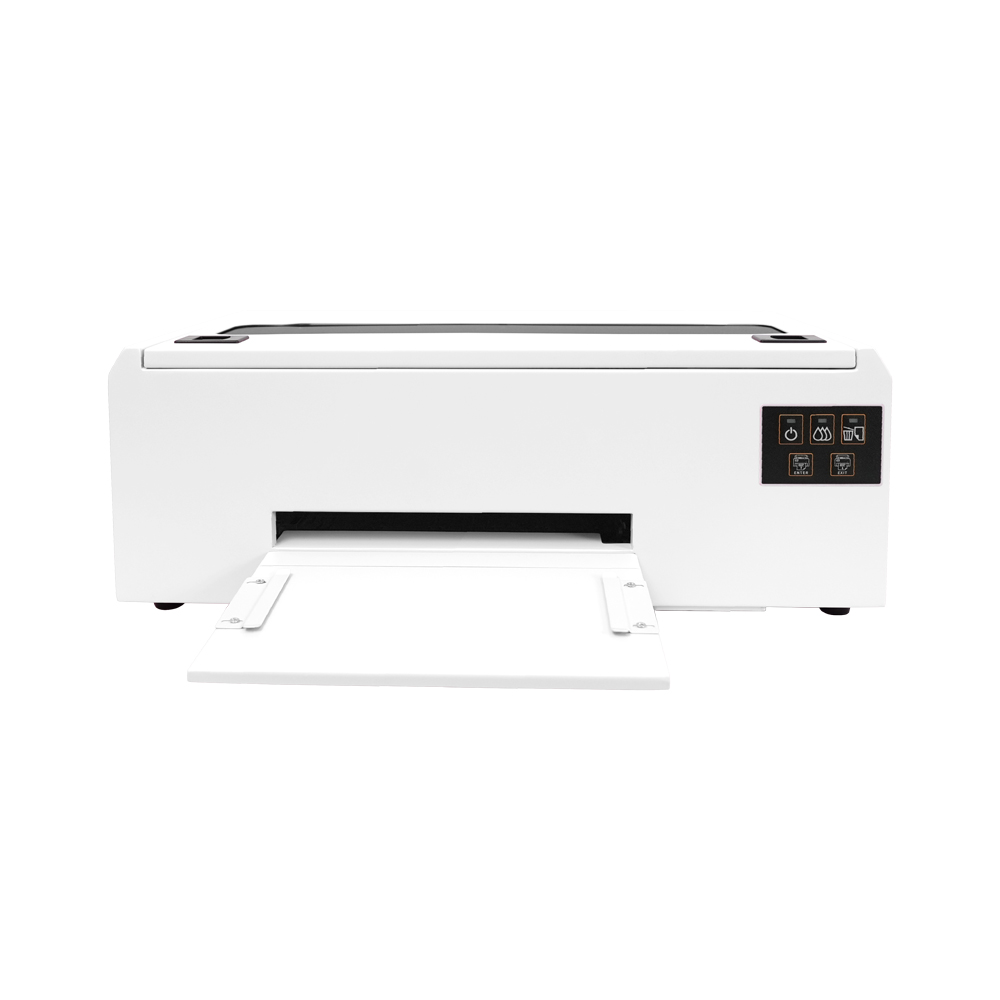
Before we even get into A3 and bigger sizes, let’s talk about A4 DTF printers because they’re the cutest little machines out there and perfect for newbies.
Here’s what makes A4 printers special:
They usually have a printable area about 8.3 × 11.7 inches — basically the same size as a standard A4 paper.
They’re super small, so you can put one on a desk in your bedroom or dorm room without a problem.
They’re low‑cost and great for starter projects, like tiny logos, pocket graphics, cap prints, and small T‑shirt designs.
The big idea here is that A4 printers are perfect for people who are just getting into custom printing or who mostly do small prints. If you’re just doing cute designs, minimal text, or tiny artwork, these guys are plenty enough.
But the downside? You can’t print huge graphics or large back prints with an A4 printer. That’s just not what they’re built for.
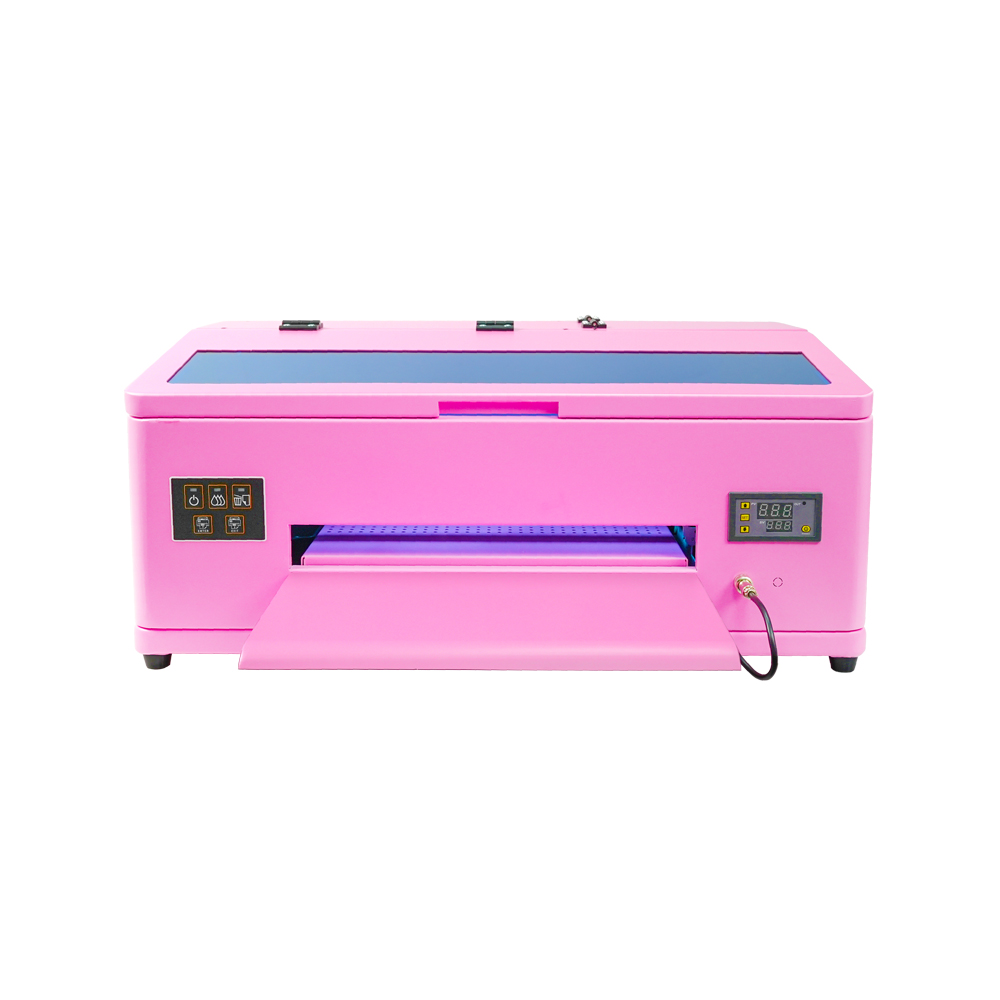
Now let’s move up a level to A3 DTF printers — these are the ones most people think of when they hear “DTF printer.”
Here’s what you should know:
A3 printers usually have a print width around 11.7 inches and a length up to around 16.5 inches.
They’re bigger than A4, so you can do standard chest prints, full‑front shirt designs, and even some moderate back prints.
A3 is usually the sweet spot for people who want a versatile printer that isn’t too huge or too expensive.
A3 printers are great for:
Full front chest tees
Designs that are a little too big for A4
Printing a few shirts at once if you’re doing small orders
They’re still small enough to fit on a desk or in a small room, but big enough to make cool‑looking apparel.
Next up — A2 printers. These are basically the middle children of the DTF world, and honestly, they’re pretty awesome.
A2 printers usually have a print width around 16.5 inches. That means:
You can print larger designs — like full‑back graphics — without having to chop them up or figure out crazy layouts.
You can handle more prints at once than with an A3.
They still don’t take up a massive amount of space compared to the big industrial printers.
A2 is often where small to medium businesses start to feel like they’ve got real production power without having to go all‑in on super expensive gear.
Okay, now we’re talking about the big boys — the A1 DTF printers.
These are the largest common size you’ll see before getting into custom industrial formats. A1 printers can typically handle widths of around 23.4 inches or more, which is huge compared to A3 and A2.
What does that mean in reality?
You can print huge graphics like full sweater backs, large banners, or giant promotional items.
You can crank out a bunch of shirts in one go — which is perfect if you’re doing mass production.
These are usually used by commercial printing shops or big teams that have a lot of orders every day.
The downside? A1 printers are way bigger and way more expensive, and they definitely need dedicated space in your shop.
Okay, so now that you know the common sizes — A4, A3, A2, and A1 — how do you actually choose which one you need?
Here are the main things you’ve gotta think about.
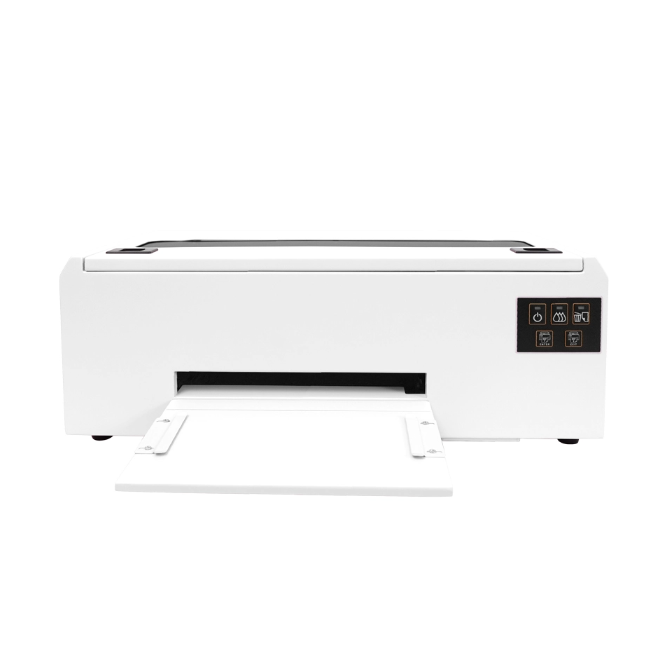
First, think about what you actually print most of the time.
If you’re printing small custom logos or little designs, a smaller printer like A4 or A3 is probably enough.
If you want big back prints, multiple prints per run, or more versatility, then A2 or A1 makes a lot more sense.
If you’re a business with tons of bulk orders, going bigger lets you print multiple shirts at once, which saves time and money in the long run.
Basically, the size of your printer should match the size of your prints and how fast you want to get them done. Bigger generally means faster and more flexible — but it also costs more.
Two things people always forget about:
Space:
A4 and A3 printers can fit on a desk.
A2 needs more table or floor space.
A1 almost needs its own room.
Cost:
Bigger printers cost more upfront.
Bigger printers use more ink.
Bigger printers usually have higher maintenance costs.
If you’re just getting started, it might make sense to start small so you don’t waste space or money. But if you know you’re gonna be doing big jobs, investing in a large printer might actually save you cash over time because you can print more in fewer runs.
Let’s break down how big each printer actually prints and what that means for your work.
Here’s a quick breakdown of the sizes most people deal with:
A4 Printers: ~8.3 × 11.7 inches — great for small designs.
A3 Printers: ~11.7 × 16.5 inches — standard shirt prints.
A2 Printers: ~16.5 inches wide — bigger and more versatile.
A1 Printers: ~23.4 inches or more — huge prints for big projects.
Knowing these numbers helps you plan what you can print without having to resize everything constantly.
Another thing people don’t talk about enough is speed.
Larger printers usually print faster because:
They can handle more area in the same amount of time.
They can print multiples at once.
For example:
Smaller printers like A4 or A3 might take longer for lots of shirts.
Bigger printers like A1 are built for volume, so they knock out orders faster.
But one thing to keep in mind is that faster doesn’t always mean better quality — some smaller printers actually nail detail more precisely because they move slower and focus on tight resolution.
Here’s a simple way to think about it:
Home Studios / Startups: A4 or A3 is your best friend — cheap, small, and good for casual orders.
Growing Businesses: A2 gives you a lot of flexibility without being crazy big.
Commercial Shops: A1 lets you handle major orders and big prints.
Match what you actually need to what you can afford and where you can put the printer in your workspace.
Always think about:
Budget: Look beyond just the machine cost — ink, film, maintenance add up.
Space: Make sure you actually have room for the printer and your workflow.
For example: a big A1 machine might look cool, but if you don’t have the space, it’ll just sit there collecting dust.
Here’s a quick table to help visualize the sizes:
| Printer Model | Max Print Size | Ideal Use Case |
|---|---|---|
| A4 DTF Printer | ~8.3" × 11.7" | Small designs, logos, hats, small tees |
| A3 DTF Printer | ~11.7" × 16.5" | Standard shirts, moderate prints |
| A2 DTF Printer | ~16.5" wide | Larger designs, bigger shirts |
| A1 DTF Printer | ~23.4" + | Huge prints, banners, mass production |
This shows how each size fits different needs — from teen side hustles to full commercial shops.
DTF printing isn’t staying the same; there are some cool future trends:
Printers are getting:
Faster
Better resolution
More efficient with ink and film
That means even bigger prints that still look sharp and high quality.
Some future DTF printers might let you:
Swap out parts
Upgrade heads or modules
Avoid buying a whole new printer when you grow
That’s like upgrading your gaming PC instead of buying a whole new one every year — super slick.
DTF printers come in various sizes, from A3 to A1, each suited for different production needs. Larger printers offer more capacity, ideal for high-volume orders, while smaller ones are great for custom, on-demand prints. Choosing the right size is key to meeting customer demands and enhancing production efficiency. For businesses looking for reliable, high-quality DTF printers, Shenzhen Chuang Cheng Da Technology Co., Ltd. offers innovative products that deliver excellent results, ensuring value and efficiency in every print.
A: It depends! Common sizes go from A4 (~8.3 × 11.7") up to A1 (~23.4" +), with bigger printers letting you print large graphics easily.
A: Totally. Bigger printers like A1 can handle full‑shirt prints, banners, and big back graphics — they’re built for that.
A: Size affects how big your designs can be and how fast you can print them. Bigger machines = bigger jobs.
A: You get faster production, bigger designs, and you can do tons of prints at once — great for businesses.
A: Think about what you’re printing, how much space you have, and how much you want to spend.


