
Views: 0 Author: Site Editor Publish Time: 2025-12-24 Origin: Site


If you’re into custom printing at all, you’ve probably heard of DTF printing. It’s kinda the coolest thing right now because it lets you make super high‑quality designs on all kinds of materials, from tees to bags, and it works on dark AND light stuff too.
But once you decide you wanna get into DTF, you suddenly have to pick a printer. And that can actually be kind of confusing, because a LOT of them come in two sizes: A3 and A4. So you’re thinking, What’s the difference? Which one should I get? That’s exactly what we’re gonna break down today, piece by piece.
This article is basically the ultimate showdown between A3 vs A4 DTF printers, and I’m gonna explain it like I’m talking to my friends in class.
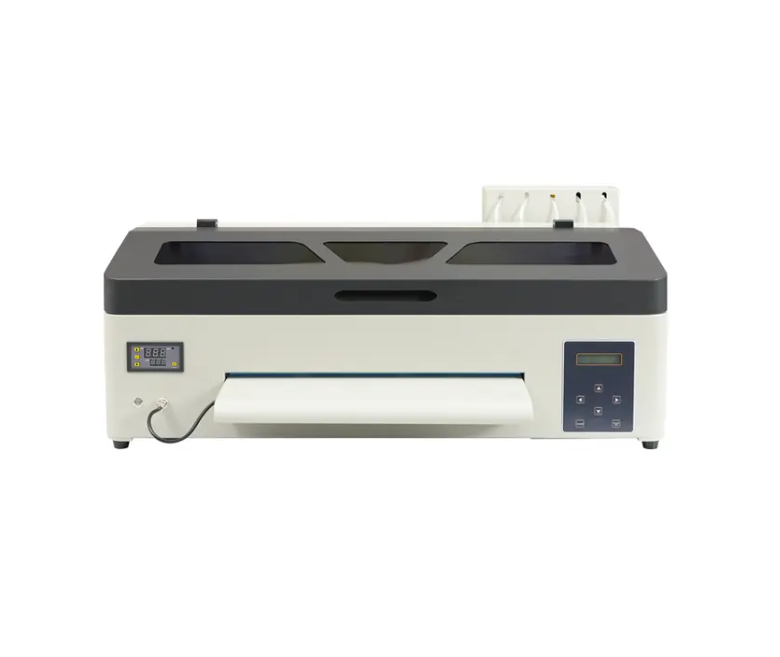
Okay, imagine a printer that can print on film sheets that are about 11.7 x 16.5 inches. That’s what an A3 DTF printer does. It’s bigger than the typical desktop printer most people use and can handle large designs without breaking a sweat.
Because it’s bigger, you can print full‑shirt graphics, posters, banners… pretty much anything that’s not tiny. If you want your design huge or you plan to do lots of prints at once, A3 is basically made for that. It’s perfect for people or businesses that want serious creative freedom and lots of output.
One of the biggest perks of an A3 DTF printer is that its print area is huge. That means if you want a big front‑of‑shirt design, a detailed back design, or even multiple prints on one sheet, A3 has your back. You don’t have to shrink your artwork just to make it fit. Seriously nice if you’re trying to make eye‑catching merch.
You can also do what’s called gang printing, which is basically putting a bunch of smaller designs all on one sheet to save time and film. Super clutch if you’re printing a few different custom tees at once.
A3 printers let you print more in one go. Because you can fit more designs per sheet, you don’t waste time constantly swapping film or restarting prints. If you’ve got loads of orders—like for a school club, a local shop, or your own merch brand—it’s way faster.
You can honestly crank out prints much quicker, which helps you keep up with deadlines, fulfill bigger orders, and even save money in the long run because you’re not wasting as much film.
A3 printers aren’t just for shirts—they can handle stuff like banners, large bags, and all sorts of creative ideas. They’re basically the “grown‑up” option for when your printing game gets serious.
Because the sheet is bigger, you’ve got more room to be creative without feeling boxed in. Huge plus for people who want to do more than just simple logos.
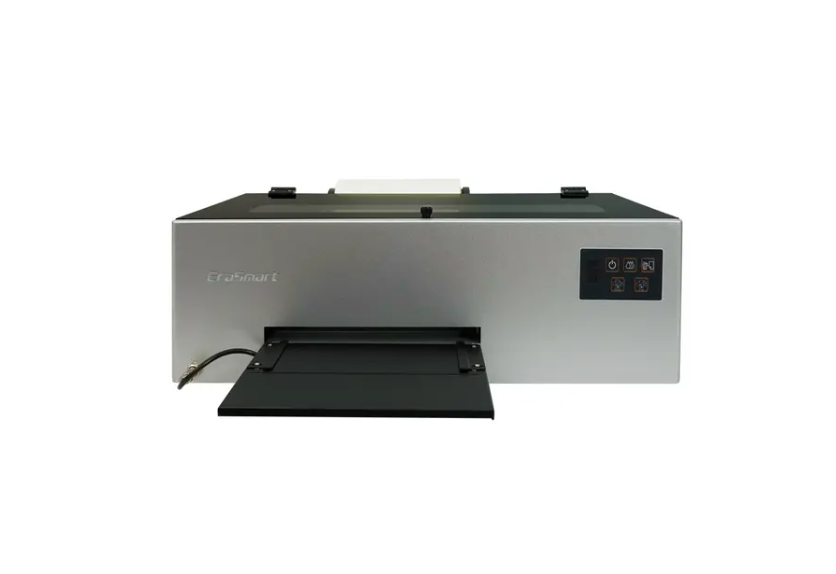
So now let’s talk about the smaller sibling: the A4 DTF printer. These are designed for print sizes up to about 8.3 x 11.7 inches—so they’re like standard paper size. Perfect for smaller designs, simpler jobs, or personal use.
You don’t lose quality with these—they still print crisp, full‑color graphics—but because they’re smaller, they shine when you’re doing logos, chest prints, patches, or custom small pieces.
One of the best parts about A4 printers? They don’t take up much space at all. You can stick one on your desk, in a closet, or anywhere you’ve got a tiny corner. It’s way easier to fit into a home office or a small workshop.
If you don’t have a big dedicated studio, this is a massive win because you don’t have to rearrange your whole room just to make it fit. Honestly, that’s a relief for most people.
A4 DTF printers are usually way cheaper than A3 models. That means less upfront cost and cheaper film and ink too. If you’re just getting into printing or testing the water, this is an awesome way to go.
It’s like the “starter printer” of the DTF world—you get great results without having to blow your savings account. Perfect for side hustles or beginners.
Because A4 printers are easy to set up and inexpensive to run, they’re ideal for small batches. If you’re doing things like personalized shirts for a party, small logo jobs, or tiny custom orders, these handle it super well.
They’re also generally simpler to use and maintain, which is great if you’re new to this and don’t want a tech headache every five minutes.
Let’s break this down in real‑talk mode:
A3 printers win when you want large graphics or complex layouts. They’re perfect for full‑shirt prints or multiple designs at once.
A4 printers are awesome for smaller detailed prints—like logos or little graphics.
A3 generally gets more done in less time per batch because it handles bigger sheets and more designs per print job.
A4 is great for low‑volume work, but if you’re constantly stopping and changing film, it can feel slower in real‑world use.
Here’s the deal with cost (rough ranges):
| Specification | A3 DTF Printer | A4 DTF Printer |
|---|---|---|
| Typical Purchase Price | Higher | Lower |
| Small Entry Price | More expensive | More affordable |
| Mid‑Range Business Price | Bigger budget | Smaller budget |
| Consumables Cost per Print | Similar (ink + film + powder) | Similar |
Yep, even though ink/film costs are about the same per shirt, the bigger prints on A3 use more material so the overall cost per job can be higher if you’re printing big designs a lot.
Ask yourself:
Are most of your prints bigger stuff like full shirts or hoodies?
Are you doing a lot of orders regularly?
Do you want to scale up someday?
If you answered yes, A3 might be the better fit.
But if you’re just starting, doing small custom pieces, or want something cheap and easy, A4 is a solid choice.
If you’ve only got a tiny workspace or a tight budget, A4 basically wins here. No question.
But if you’ve got room and want more printing power, investing in an A3 now might save you from upgrading later.
If you plan to grow your printing operation, A3 gives you more room to expand without buying another printer right away. It’s like future‑proofing a bit.
A3 printers usually have more advanced systems to prevent clogging, which is great—but they may need scheduled maintenance more often if you’re printing a LOT.
A4 ones are simpler, so while they might need manual cleaning a bit more often, it’s usually not too complicated.
Most of the time, the ink + film + powder cost per shirt stays around the same regardless of printer size—but the bigger prints on an A3 use more materials overall because the sheet is bigger.
Here’s how they stack up if you’re thinking business:
| Use Case | A3 Printer | A4 Printer |
|---|---|---|
| Large Orders | ✔️ | ❌ |
| Small Custom Prints | ✔️ | ✔️ |
| Tight Workspace | ❌ | ✔️ |
| Low Budget | ❌ | ✔️ |
| Quick Scale‑Up | ✔️ | ❌ |
So yeah… A4s are basically stepping stones into the world of DTF printing, while A3s are machines that help you level up once you start selling bigger runs or more stuff.
Choosing between an A3 or A4 DTF printer depends on your business needs. A3 printers are ideal for high-volume, scalable operations, while A4 printers are perfect for startups or smaller custom projects. Shenzhen Chuang Cheng Da Technology Co., Ltd. offers high-quality DTF printers that cater to various business sizes. Their products provide excellent print quality and efficiency, ensuring businesses of all sizes can achieve professional results.
A: The big difference is size. A3 can print bigger stuff (like full shirts), and A4 is more compact for smaller designs.
A: If you’re just starting out or printing small amounts, go A4. But if you want to grow bigger later, A3 is the move.
A: Yeah, usually. A3s cost more upfront but can pay off if you print a lot. A4s are cheaper and easier to start with.
A: Not usually—they’re best for smaller prints, like logos or patches.
A: Think about what size stuff you’ll print, how often you’ll print it, how much space you have, and how big your budget is.


