
Views: 0 Author: Site Editor Publish Time: 2026-07-04 Origin: Site


Moving from hobbyist crafting to commercial production marks a critical jump. You need reliable hardware to maintain output quality and keep up with daily demand. A desktop setup simply cannot sustain continuous, commercial-grade short runs. Buyers face a serious challenge evaluating immediate upgrade options. You must balance machine footprint constraints against the need for industrial reliability. Overhyped marketing claims often complicate this decision. Many vendors insist their machines print on absolutely anything without preparation. We need a clear lens to evaluate true machine capabilities. This article offers an evidence-based look at daily operational realities and strict substrate limitations. You will also learn exact criteria to select a trustworthy hardware partner.
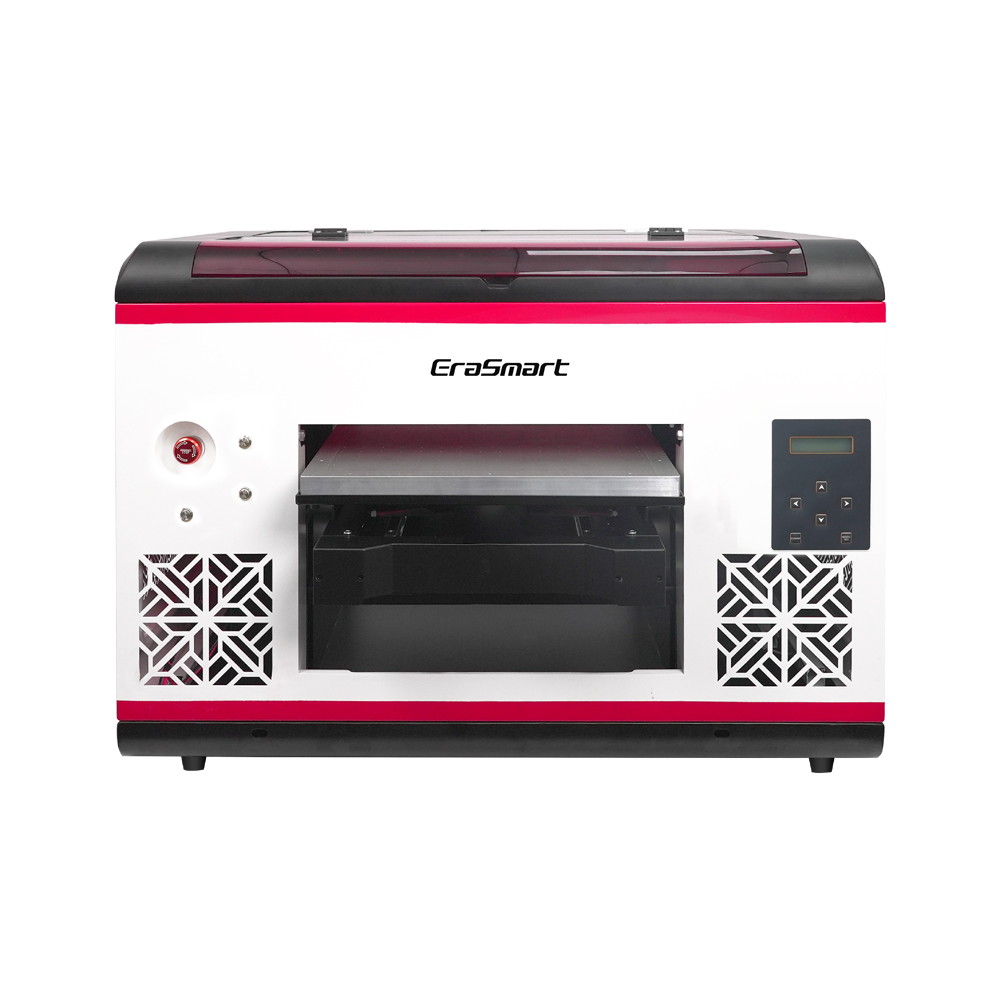
An A3 UV printer bridges the gap between desktop hobbyist machines and industrial formats, optimizing ROI for customized promotional items.
Material compatibility requires nuance; while versatile, a multi material UV printer still requires proper primers and environmental controls for challenging substrates like glass or bare metal.
Hybrid workflows utilizing a UV DTF printer alongside standard flatbed operations maximize product coverage for irregular or highly curved objects.
Long-term profitability hinges heavily on the UV printer manufacturer—specifically their post-sale SLA, parts availability, and transparent maintenance guidelines.
Every production space has practical limits. Maximizing output per square foot drives early profitability. The 30cm x 42cm print area finds a perfect middle ground. It balances a manageable shop footprint alongside high margin volume. Consider the daily output potential of a high-quality gift UV printer. You can comfortably array multiple phone cases, acrylic awards, or custom pens in a single pass.
Large flatbed machines demand dedicated warehouse zones. Roll-to-roll machines serve completely different continuous banner needs. A compact machine offers short-run agility without excessive overhead. You swap jigs in minutes rather than enduring complex retooling routines. This flexibility keeps operations humming throughout diverse daily orders.
Defining success requires looking beyond simple hardware specifications. True returns rely on consistent print pass rates and minimal ink waste. You track ink consumption metrics across various print jobs. Operational labor hours also factor heavily into your success criteria. Fast job setups directly reduce the labor time assigned to each batch. Efficient A3 UV printer deployment turns short runs into highly lucrative work.
The industry constantly spreads the "zero-prep universal printing" myth. Vendors sometimes exaggerate adhesion capabilities across all surface types. Transparently debunking this myth sets accurate and realistic production expectations. Standard adhesion without any preparation only applies to specific materials. Wood, standard plastics, and matte acrylics readily accept UV-curable inks. These porous or microscopically rough surfaces lock the ink droplets tight. You can expect strong durability and excellent scratch resistance immediately.
Complex substrates demand rigorous preparation before printing begins. Glass, glazed ceramics, and highly polished metals will reject untreated ink. Operators must manually apply specialized adhesion promoters to these surfaces. A reliable multi material UV printer handles the precise droplet placement, but chemistry dictates final adhesion. Primers alter the surface energy to accept the ink bond permanently. You must also account for distinct post-print curing times.
Physical carriage height introduces another non-negotiable operational constraint. Most compact systems restrict printable item thickness to around 10cm or 15cm. The printhead must remain extremely close to the material surface. Increasing the drop distance between nozzles and substrates destroys print sharpness. Ink droplets drift mid-air, resulting in blurry text or overspray on sharp edges.
Best Practice: Always test a new substrate batch for adhesion strength using a cross-hatch tape test before running a full order.
Common Mistake: Ignoring atmospheric conditions in the workshop. High humidity can severely interfere with primer effectiveness on glass or bare metal.
Printing directly to a substrate handles most flat goods perfectly. However, hybrid workflows integrate film transfers for difficult product shapes. Understanding these operational differences prevents ruined blanks and wasted time. A standard flatbed UV printer deposits ink straight onto the final product. Conversely, a film method prints onto a carrier sheet. The operator then transfers the decal to the final object manually.
You should choose direct execution for flat or slightly angled items. It excels during bulk runs loaded into custom alignment jigs. Direct printing ensures absolute dimensional accuracy for strict design tolerances.
You must integrate a UV DTF printer for irregularly shaped items. Extreme curves cause direct printing distortion. Film transfers easily wrap around complex geometry and hard-to-reach surfaces. They also eliminate the need to create custom wooden or acrylic jigs for odd shapes.
Decision Factor | Direct Flatbed Printing | UV DTF Film Transfer |
|---|---|---|
Target Object Shape | Flat, slightly curved, rigid | Irregular, highly curved, awkward angles |
Labor Requirements | Low (automated printing in jigs) | Moderate (manual decal application) |
Setup Speed | Slower (physical jig alignment required) | Faster (no physical alignment jigs needed) |
Surface Finish | Matte, gloss, embossed textures | High gloss, raised tactile feel |
Running this equipment requires mastering specific pre-press digital workflows. RIP software translates your standard image files into machine-readable droplet commands. Operators face a distinct learning curve mastering ICC profiling. Proper color management ensures screen colors match the cured physical output. You also need to configure specific spot channels accurately. White and varnish layers create raised, embossed, or 3D textural effects. Mastering these software steps guarantees professional-grade custom products.
White ink presents unique physical challenges due to its chemical makeup. It relies on heavy titanium dioxide particles for stark opacity. These dense particles constantly try to settle at the bottom. A stationary white ink supply quickly clogs delicate printhead microscopic nozzles. Your system requires automated white ink circulation and stirring components. These active mechanisms keep the titanium dioxide suspended properly.
Protecting your investment demands strict adherence to maintenance schedules. Operators must perform non-negotiable daily and weekly upkeep routines.
Daily Routine: Print a test nozzle check pattern before initiating any production runs.
Daily Routine: Clean the rubber wiper blade and capping station to prevent UV crust buildup.
Weekly Routine: Inspect and gently swab the printhead edges using approved lint-free materials and cleaning solution.
Vacation Mode: Flush the ink lines with specialized cleaning fluid if leaving the machine idle for extended periods.
A machine is only as reliable as the company backing it. Vetting a uv printer manufacturer requires intense scrutiny of their operational transparency. Start by assessing their specific hardware component choices. Demand clarity on printhead configurations. Compare industrial Epson i3200 options against entry-level XP600 models. Look for robust dual UV LED curing lamps and heavy-duty guide rails. High-quality motion parts prevent vibration and ensure precise dot placement accuracy.
Compliance and documentation verify a manufacturer's commitment to safety standards. Do they provide clear, comprehensive operational manuals in fluent English? You must verify essential CE or RoHS safety certifications. Request the official Material Safety Data Sheets (MSDS) for their proprietary inks. Proper documentation prevents workplace hazards and operational headaches down the line.
Your post-sale Service Level Agreement (SLA) determines long-term hardware viability. Clarify exact warranty coverage details, noting exceptions for consumable parts. You should demand access to remote diagnostic software support. Ask blunt questions about domestic spare parts inventory and shipping timelines. Waiting weeks for a replacement ink pump halts production entirely.
Use this shortlisting logic to finalize your vendor selection:
Request a custom sample print using your specific difficult substrate.
Track their initial communication speed and technical response times closely.
Investigate user community feedback across independent industry forums.
Review their official policy on remote software onboarding and operator training.
Transitioning to commercial-grade flatbed printing transforms your production capabilities. You move from basic personalization to delivering premium custom items. We evaluated the operational realities defining true daily production capacity. Substrate nuances demand specific chemical handling to ensure permanent ink adhesion. Hybrid workflows successfully combine direct methods and film transfers for ultimate product versatility.
Successful adoption requires highly capable hardware from a trusted partner. It also requires rigorous adherence to operational and material-handling protocols. Operators must maintain strict daily cleaning routines to protect sensitive printheads. Do not compromise on internal component quality or post-sale service agreements. Take the next practical step to validate your specific production needs. Request a live video demo or a custom printed sample on your exact substrate from a shortlisted vendor today.
A: Yes. While modern LED curing systems produce significantly less ozone, the inks still emit volatile organic compounds (VOCs). You should operate the machine in a well-ventilated room. Implementing an active fume extractor or specialized carbon air filtration system is highly recommended to maintain environmental safety and control workshop odors.
A: You should expect to spend roughly 10 to 15 minutes on daily maintenance. This brief period covers running morning nozzle checks, gently cleaning the capping station, and wiping down the carriage components. Skipping these quick daily steps frequently leads to catastrophic printhead failure.
A: Direct printing on cylinders requires a specialized rotary attachment connected to the flatbed carriage. However, rotary jigs on compact machines possess strict diameter and length limitations. For highly tapered tumblers or complex bottles, utilizing film transfers proves much faster and eliminates physical hardware constraints.
A: A printhead serves as a consumable part, not a permanent lifetime component. Depending on the exact model and daily production volume, they typically last between 6 to 18 months. Strict adherence to automated ink circulation and manual daily maintenance schedules maximizes this expected lifespan.


