
Views: 0 Author: Site Editor Publish Time: 2026-05-16 Origin: Site


In the gift business, the product itself is rarely the whole story. A plain phone case, acrylic plaque, keepsake box, or guitar pick may be inexpensive, but once a customer adds a family name, wedding date, company logo, or inside joke, the value changes. That is also where production gets tricky. Small orders are profitable only when you can decorate them quickly, repeatably, and without rebuilding your setup every time a new design comes in.
For that reason, many small studios and gift shops eventually start looking at a UV flatbed printer. It prints directly on many hard goods, and the UV light cures the ink almost immediately. In daily production, that means you can keep blank inventory on the shelf and decorate products after the order is confirmed, instead of guessing which designs might sell next month.
Still, a UV printer is not a magic shortcut. It works beautifully on some products and poorly on others. Before buying one, it helps to understand what the machine does well, what can go wrong, and which features make a real difference in a busy custom gift workflow.
Fast turnaround: UV ink cures right away, so many finished pieces can go from printer bed to packaging with very little waiting time.
Broad product range: Acrylic, coated metal, wood, plastic, leather-like surfaces, and many rigid blanks can be decorated after proper testing.
Testing is still necessary: Reflective surfaces, silicone, deep curves, waxed materials, and uneven textures can cause adhesion or print-quality problems.
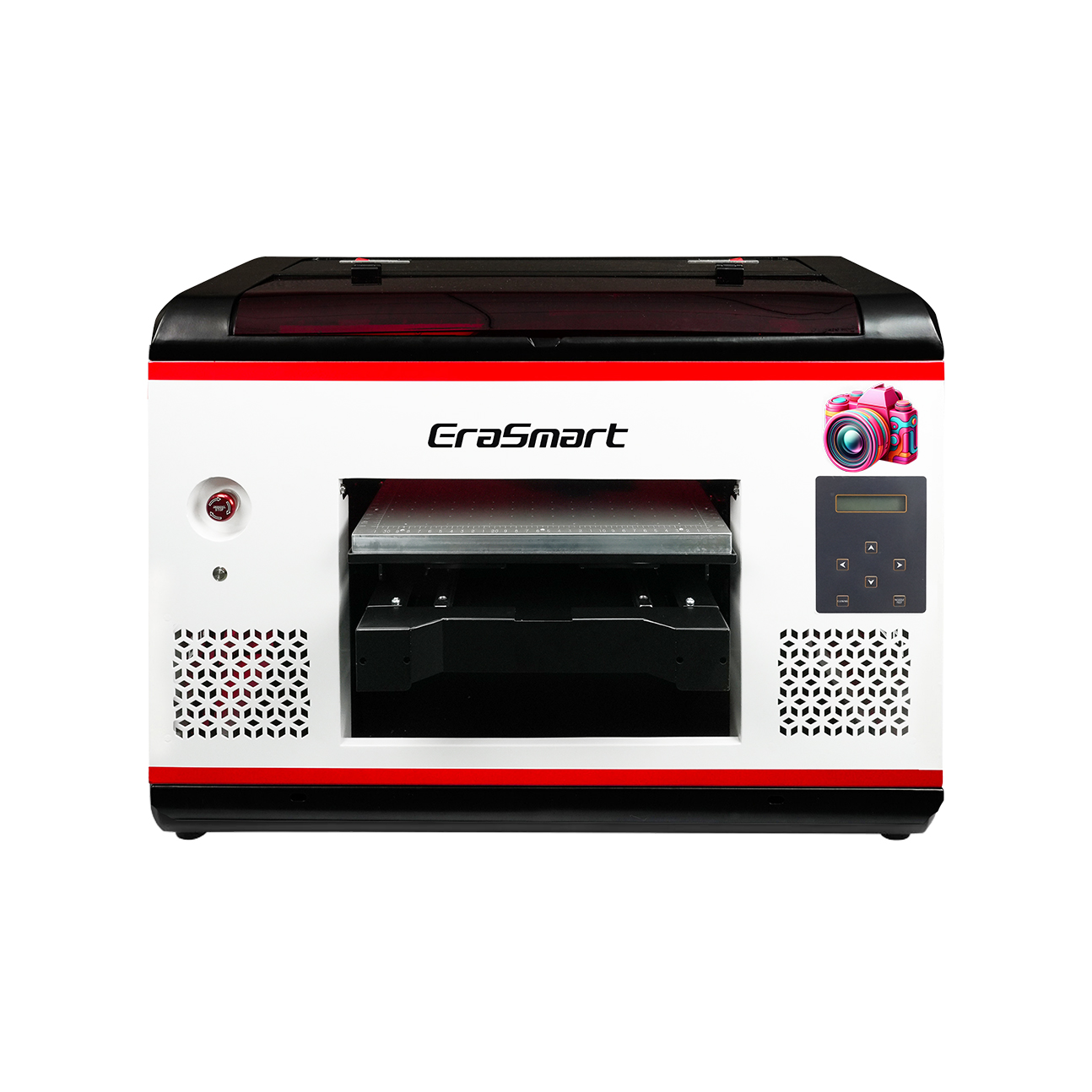
A3 is often enough: For many gift sellers, an A3 UV printer provides useful batch capacity without requiring an industrial production floor.
Traditional decoration methods are not outdated. Screen printing is still excellent when the same design runs hundreds or thousands of times. Sublimation is reliable when the blank is made for it. Laser engraving has a clean, premium look on wood, acrylic, and some metals. The problem appears when the customer wants one full-color item today, then five different names tomorrow, then a batch of corporate gifts next week.
That kind of order pattern favors digital direct printing. A custom gift printer lets a shop move from artwork to production without screens, vinyl weeding, transfer paper, or long drying time. The operator prepares the file, places the blank, checks the height, and starts printing. For a shop handling many small orders, removing those setup steps can matter more than raw print speed.
UV printing also gives sellers another way to raise the selling price: surface effect. White ink can create a base layer on dark or transparent materials. Varnish can add gloss or a raised feel. Used carefully, those layers can make a small plaque, badge, or desk sign look less like a flat printed object and more like a finished custom product.
Production Factor | Traditional Methods | Direct UV Printing |
|---|---|---|
Setup Time | Often includes screens, plates, transfers, pressing, or separate finishing steps | Usually starts from a digital file and a prepared jig or print bed |
Color Cost | Extra colors may increase setup and labor | Full-color artwork is part of the normal print process |
Product Range | Often tied to a specific material or coating | Can cover many rigid substrates after adhesion testing |
Finish Options | Usually flat unless another process is added | Supports white layers, gloss, raised details, and textured effects |
Phone cases, AirPods covers, small power banks, USB drives, card holders, and similar accessories are good starting points because customers already buy them as personal items. They are also easy to niche down: pets, schools, weddings, sports teams, local businesses, and creator merchandise all fit this category.
The main production detail is positioning. If every case or accessory has to be placed by eye, mistakes will eat the profit. Use exact-fit jigs whenever possible. A good jig lets one operator load a full batch in the same position, print it, and repeat the job later without rebuilding the layout.
A flatbed UV printer is useful for acrylic awards, desk signs, branded plaques, wood panels, nameplates, and small event gifts. These items often need logos, names, QR codes, and full-color artwork in the same batch.
White ink is especially important here. Clear acrylic and dark surfaces can make colors look weak unless a white layer sits underneath the design. With the right underbase, gradients and fine text remain readable instead of disappearing into the substrate.
Some of the highest-margin jobs are not large items at all. Guitar picks, board-game tokens, puzzle pieces, Lego-style bricks, dice trays, craft blanks, and casino-style chips can all work well when the jig is prepared correctly. One bed filled with tiny pieces may be more profitable than one large plaque because the material cost is low and the perceived value is specific to the buyer.
Tumblers, mugs, bottles, and barware can be printed when the machine uses a suitable rotary attachment. This area needs more testing than many sellers expect. One powder-coated tumbler may hold ink well, while another supplier’s coating may scratch easily. Glossy ceramics and stainless finishes can also behave differently from batch to batch. Always test the actual blank you plan to sell.
Mirror-finish metal and polished chrome are risky. The UV light can bounce back toward the printhead and cure ink where it should never cure: inside the nozzle area. That can turn a small custom job into an expensive repair. If reflective sections cannot be avoided, mask them carefully or use a tested non-reflective primer. For many small workshops, the simpler rule is to avoid mirror-finish orders unless the process has already been proven.
A normal flatbed printhead wants a fairly flat surface and a consistent gap. When the surface drops away too much, the droplets spread before they land. Text becomes fuzzy, fine lines lose definition, and colors can look misty. Deep bowls, steep curves, and recessed areas are therefore poor matches for standard flatbed printing.
If those products are central to your business, consider a higher-gap industrial UV printing machine, or use UV DTF transfers for curved and awkward surfaces.
Some materials simply do not want to accept ink. Silicone, waxed wood, waterproof fabrics, and certain coated plastics can make the ink bead up or scratch off. The print may look acceptable when it leaves the bed and still fail after handling. Scratch tests and cross-hatch tests should be part of your sampling process. Primer, flame treatment, corona treatment, or a different decoration method may be needed.
Printhead setup: For real production, two heads are much easier to live with than a single-head setup. One can manage color while the other handles white and varnish layers, reducing the time needed for layered effects.
Bed size: An A3 UV printer is a sensible starting point for many commercial gift shops. It can batch phone cases, small signs, plaques, and accessories while still fitting in a modest workspace.
Automatic height detection: This protects the printhead when staff move between thin acrylic sheets, thicker boxes, plaques, and uneven blanks.
White ink circulation: White ink settles over time. Circulation and stirring systems help prevent clogs and reduce the amount of manual intervention needed each morning.
Software and repeat-order workflow: The RIP software, templates, and job-saving features should be simple enough for everyday operators, not just the person who installed the machine.
A UV printer makes sense when manual processes start costing sales. If you are turning away full-color jobs, spending too long setting up small batches, or holding decorated stock that does not sell, direct printing may solve a real problem. If demand is still uncertain, outsource a few samples first. Learn which blanks sell, what customers will pay, and how often repeat orders come in.
UV flatbed printing can be a strong production tool for short-run custom gifts, but it works best with discipline. Choose a focused product range. Test adhesion before selling. Build reliable jigs. Keep white ink moving. Match the bed size to your typical batch, not just the largest job you can imagine. With those basics in place, the machine becomes more than a printer; it becomes a practical way to turn blank goods into higher-value custom products.
It depends on the blank, coating, primer, ink, and curing quality. On compatible hard substrates, UV prints can be very durable. Every new blank should still be scratch-tested before it is sold.
Yes. Use a white ink underbase so the color layer stays bright instead of blending into the dark surface.
Expect nozzle checks, cleaning around the capping station, keeping the bed clear, and watching the white ink system. Skipping those small tasks usually creates bigger repair costs later.


