
Views: 0 Author: Site Editor Publish Time: 2026-08-26 Origin: Site


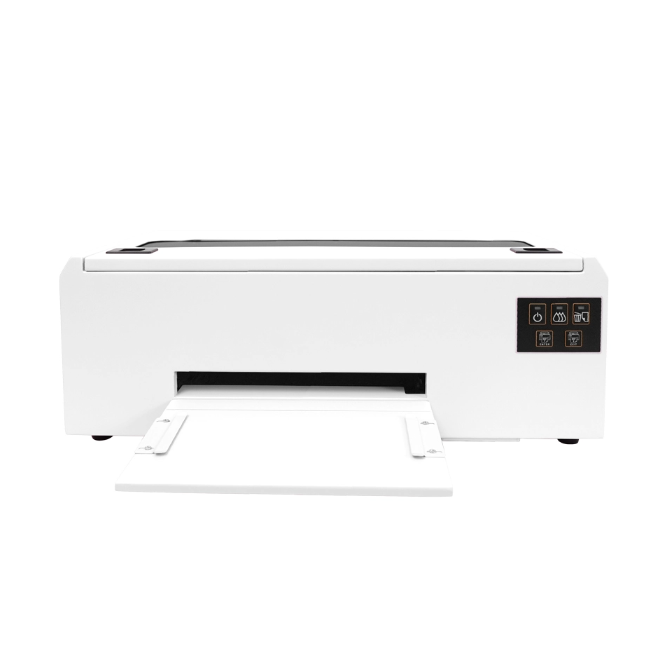
Garment printing has changed a great deal in recent years. Customers no longer want only large batches of identical T-shirts. Many now ask for short runs, personalized names, limited-edition graphics, team uniforms, workwear, event clothing, and online print-on-demand products. For a print shop, that means production needs to be flexible without becoming too expensive or complicated.
This is where a DTF Printer becomes useful. DTF, or direct-to-film printing, allows an image to be printed onto PET film and then transferred to fabric with adhesive powder and a heat press. The process works with a broad range of textiles and does not require the fabric pretreatment commonly associated with some other digital garment-printing methods.
That does not mean DTF is perfect for every job. Large-volume screen printing and highly specialized textile processes still have their place. However, for businesses handling varied designs, mixed fabrics, and smaller order quantities, DTF offers several practical advantages.
One of the biggest advantages of DTF printing is material flexibility. A DTF transfer can be applied to cotton, polyester, cotton-polyester blends, canvas, and many other textile surfaces.
This matters because garment businesses rarely work with only one fabric. A customer may order cotton T-shirts today, polyester sportswear tomorrow, and canvas tote bags later in the week. Using one printing process for all three products makes production easier to organize.
Some printing technologies perform best on a narrow range of materials. Sublimation, for example, is mainly used with polyester or specially coated products. DTF printing is less restrictive, which gives a business more freedom when accepting new orders.
A DTF Printer normally uses CMYK ink together with white ink. The white layer sits behind the color image and helps the design remain visible on dark garments.
Without that white base, colors may appear weak or disappear into black, navy, red, or other dark fabrics. With the white layer in place, businesses can offer the same design across different garment colors without rebuilding the entire production method.
This is especially useful for clothing brands and promotional suppliers that need to offer multiple color options.
Pretreatment can slow down garment-printing workflows. It adds another production stage, requires additional materials, and may need drying before the garment can be printed.
DTF printing avoids this step in most standard applications because the image is printed onto film rather than directly onto the garment. Hot-melt powder provides the adhesive layer needed for the transfer.
This makes the workflow relatively straightforward:
Prepare the artwork.
Print it onto PET film.
Apply adhesive powder.
Cure the powder.
Heat press the transfer onto the garment.
For a small shop, removing the pretreatment stage can save space and make daily production easier to manage. It also reduces the chance of uneven pretreatment affecting the finished image.
Traditional printing methods are often most economical when the order quantity is large. Screen printing, for example, may require screens to be prepared for each color in a design. That preparation time can be justified for hundreds of garments, but it may be impractical for an order of five shirts.
A DTF Printer does not require screens or printing plates. Once the artwork is ready, the operator can print one design, several variations, or a complete gang sheet.
This makes DTF suitable for:
Personalized clothing
Small brand collections
Sample production
Event merchandise
Team names and numbers
Online print-on-demand orders
Replacement garments
Customer approval samples
A customer can order ten different names without forcing the printer to create ten separate sets of screens. From a business point of view, that opens the door to smaller orders that might otherwise be rejected.
DTF printing can reproduce detailed, multicolored artwork in a single digital workflow. Photographs, gradients, illustrations, logos, fine lettering, and complex color combinations can all be prepared through RIP software.
With screen printing, every additional color may increase setup time and production complexity. With DTF, the printer handles the CMYK color channels digitally.
This is helpful when customers provide artwork containing shadows, color transitions, or small decorative details. The operator does not need to simplify every image into a small number of spot colors.
Good DTF printing can retain fine edges and small design elements, provided the artwork, printer settings, film, ink, and curing process are properly controlled.
This is particularly relevant for:
Brand labels
Club logos
Sleeve graphics
Workwear identification
Decorative text
Small promotional designs
Of course, extremely tiny text can still be difficult to reproduce and press cleanly. There are practical limits. Even so, DTF normally gives businesses more flexibility than methods that depend heavily on cutting, weeding, or separating colors.
Heat transfer vinyl can work well for names, numbers, and simple graphics. The difficulty appears when the artwork contains small details, several colors, or complicated shapes.
Vinyl designs often need to be cut and weeded. Weeding means removing unwanted material from around the image, which can take considerable time when the design is intricate.
DTF transfers do not require this step. The image is printed directly onto the film, powdered, cured, and pressed.
For a shop processing many different designs, eliminating manual weeding can reduce labor time. It also makes detailed illustrations and multicolored artwork more practical.
The difference becomes particularly noticeable when producing small logos in quantity. Removing tiny pieces of vinyl from dozens of designs is not usually how an operator wants to spend the afternoon.
A useful feature of DTF production is that printed transfers can be prepared in advance and stored for later pressing, provided they are handled and stored correctly.
This separates printing from garment production. A business can print a batch of transfers during a quieter period, then press them when orders arrive.
That approach is useful for:
Repeat customer logos
Staff uniforms
School and team designs
Brand collections
Seasonal products
Frequently reordered graphics
A transfer supplier can also produce ready-to-press graphics for customers that already own heat presses. In this business model, the company sells the transfer rather than the finished garment.
Storage conditions still matter. Transfers should be protected from moisture, excessive heat, dust, and physical damage. Even so, the ability to prepare designs before the garment is available offers more flexibility than direct-only printing methods.

Traditional apparel businesses sometimes hold large quantities of finished printed clothing. This creates a problem when certain sizes, colors, or designs do not sell.
DTF supports a more flexible production model. A business can keep blank garments in stock and apply the design after the customer places an order.
For example, instead of storing fifty finished shirts across five colors and several sizes, a seller may keep blank garments and a set of prepared transfers. The correct design is pressed only after the size and color are confirmed.
This does not remove the need for inventory management, but it can reduce the number of finished products sitting unsold.
The model is particularly useful for online stores, startup clothing brands, and businesses testing new artwork.
Not every printing business operates from a large factory. Many begin in a spare room, compact studio, retail back room, or small industrial unit.
Desktop A4 and A3 DTF printers are available for users with limited space. A basic setup may include the printer, a curing oven, a heat press, consumables, and a work surface.
Larger roll-fed systems need more room, especially when paired with an automatic powder shaker. However, even these systems can be more compact than some traditional garment-printing production lines.
Space should still be planned carefully. The operator needs room for loading film, maintaining the printer, handling powder, storing ink, curing transfers, and pressing garments. Ventilation is also important around the curing stage.
A small business can begin with a compact DTF Printer and manual powdering before moving to a wider roll-fed system. This creates a fairly clear growth path.
At the entry level, the business may produce a limited number of transfers each day. As orders increase, production can be improved through:
Wider printing capacity
Faster printhead configurations
Automatic powder shaking
Integrated curing
Roll-to-roll film handling
Larger heat presses
Better workflow organization
The key is to upgrade when the workload justifies it. Buying a large automated system too early can create unnecessary costs, while staying with an undersized desktop printer for too long can hold back production.
DTF technology gives businesses several equipment levels to choose from rather than forcing them into one fixed production scale.
A DTF Printer is not limited to standard T-shirt shops. The same equipment can support several types of business.
A print-on-demand seller can produce individual orders without holding large quantities of finished clothing. A promotional supplier can provide branded workwear and event apparel. A fashion startup can test small collections before committing to larger production runs.
Other opportunities include:
Ready-to-press transfer sales
Custom sportswear
School and club clothing
Staff uniforms
Merchandise for musicians and creators
Personalized gifts
Clothing repairs and replacement logos
Contract printing for local shops
The equipment does not guarantee that these businesses will be profitable. Sales, artwork quality, pricing, customer service, and production management still matter. What DTF offers is a flexible production method that can serve these different markets.
DTF printing requires training, but the basic workflow is understandable for new operators. Once the printer, RIP software, powdering, curing, and heat-press settings are properly configured, repeat jobs become easier to manage.
The areas that need the most attention are usually:
White ink circulation
Nozzle maintenance
Color and white-layer alignment
Powder application
Curing temperature
Heat-press settings
Film peeling method
Environmental conditions
There will be some trial and error at the beginning. That is normal. A supplier that provides setup instructions, printing profiles, maintenance guidance, and remote technical support can shorten the learning period considerably.
A properly produced DTF transfer can offer good stretch, adhesion, color strength, and wash resistance.
Durability depends on the full production combination rather than the printer alone. Ink quality, film coating, adhesive powder, curing, heat-press temperature, pressure, pressing time, and garment material all affect the result.
A common mistake is to blame the printer for every wash problem. In reality, under-cured powder or incorrect press settings may be the cause.
Before using a new combination commercially, businesses should test the transfer on the actual fabric and complete several wash cycles. This provides a more reliable result than relying only on the appearance immediately after pressing.
The advantages of DTF are significant, but buyers should also understand the operating requirements.
White ink needs regular circulation and maintenance. Adhesive powder must be handled carefully. Curing requires suitable ventilation. Printheads and other wear parts will eventually need replacement.
The process also involves several consumables, including PET film, ink, powder, cleaning fluid, and maintenance components.
For businesses willing to follow a routine and operate the equipment regularly, these requirements are manageable. For buyers expecting a printer that can sit unused for weeks and start perfectly without maintenance, DTF may not be the best fit.
The main advantage is flexibility. A DTF Printer can produce full-color transfers for cotton, polyester, blended fabrics, and other textile materials without requiring a separate screen or printing plate for each design.
Yes. DTF printing is particularly suitable for short runs, personalized garments, samples, and mixed designs because there is relatively little setup work between jobs.
Yes, completed transfers can be stored for later use when they are kept dry, clean, and protected from heat and damage. Storage life depends on the materials and environmental conditions.
Regular maintenance is necessary, especially for the white ink system. Nozzle checks, capping-station cleaning, ink circulation, and general printer inspection help reduce production problems.
A DTF Printer can be a practical option for businesses producing custom clothing, short runs, branded workwear, or print-on-demand products. EraSmart offers compact and roll-fed DTF printing solutions for different production levels, with equipment options designed around print width, white ink management, workflow requirements, and available workspace.


