
Views: 0 Author: Site Editor Publish Time: 2026-10-01 Origin: Site


Are you a print shop owner or entrepreneur actively evaluating equipment to expand into hard-surface customization? Navigating the hardware landscape can feel overwhelming. You likely know standard DTF works beautifully for apparel and textiles. However, UV DTF is entirely different. It targets rigid materials, irregular shapes, and hard goods. This technology solves major production headaches.
A UV DTF Printer bridges a critical gap in the market. It outperforms traditional direct-to-object UV printing, which often fails on curved surfaces. It also replaces adhesive vinyl, freeing you from tedious, manual weeding. In this article, you will discover the true capabilities of this equipment. We will explore high-margin product ideas, material compatibility, and production workflows. Read on to see how this technology can transform your custom printing business.
Versatility: A UV DTF printer allows for high-durability transfers on glass, metal, wood, acrylic, and certain plastics without specialized coatings.
Profitability: Eliminates weeding and masking, significantly reducing labor costs for custom promotional products and localized short-run manufacturing.
Core Limitations: UV DTF is designed for rigid or semi-rigid substrates; it is not a solution for garments or highly flexible textiles.
Business Impact: Ideal for high-margin niches like custom drinkware, corporate gifting, and bespoke packaging.
Print shops often face frustrating limitations when customizing hard goods. Traditional direct-to-object UV printers demand completely flat surfaces. They rely on specialized rotary attachments for cylindrical items. This severely restricts your available product shapes. Meanwhile, adhesive vinyl requires intensive manual labor. Vinyl also lacks dimensional, tactile texture. These limitations eat into your profit margins and slow down production.
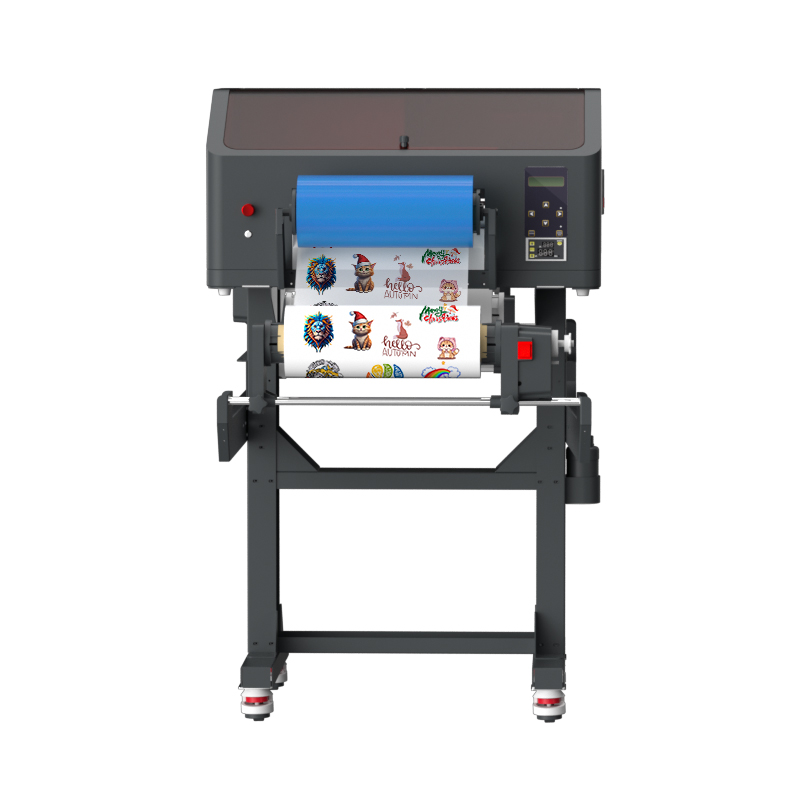
A UV DTF Printer solves these exact problems. The production process is straightforward and highly efficient. You print your design directly onto an A-film. The printer simultaneously lays down white ink, vibrant colors, and a protective varnish layer. Next, you laminate this printed sheet to a B-film backing. This creates a brilliant, peel-and-stick 3D decal. You can apply these decals instantly to highly irregular surfaces. No weeding is required.
The commercial advantages are immediate and measurable. You achieve a much lower cost-per-acquisition for custom orders. You can confidently offer zero Minimum Order Quantities (MOQs) to your clients. Best of all, you can fulfill dozens of different product types using just a single print run. You might print a tumbler logo, a laptop decal, and a leather journal graphic on the exact same sheet.
You can effortlessly customize tumblers, frosted glass cans, and ceramic mugs. Your target market includes local boutiques, cafes, and online craft sellers. The primary application covers smooth glass and ceramic surfaces. Retail markup potential is very high in this niche. Unlike sublimation, you do not need polymer-coated blanks. You also do not need a mug press. The decals adhere beautifully to dark mugs because the printer utilizes white ink. We recommend conducting local dishwasher-resistance testing. Hand washing often ensures maximum longevity.
Corporate gifting is a lucrative sector. You can brand pens, power banks, and USB drives instantly. The target market includes B2B clients, trade shows, and event organizers. You apply decals to hard plastics and smooth metals. You can batch-print hundreds of tiny logos simultaneously on one film roll. This scalability allows for rapid deployment. Your markup relies on high-volume production. You eliminate the setup times associated with pad printing or screen printing.
Indie cosmetic brands and boutique retailers need high-end labeling. You can customize glass cosmetics jars, boutique cardboard boxes, and metal tins. Smaller brands cannot afford massive MOQs for factory-printed packaging. UV decals provide an embossed, premium look. You apply them directly to glass or rigid cardboard. The markup comes from offering low-volume, bespoke branding solutions. The tactile 3D varnish elevates the perceived value of the product instantly.
Consumers and gamers love personalized gear. You can customize phone cases, laptop covers, and gaming consoles. The primary application involves polycarbonate or metal cases. The UV varnish creates a scratch-resistant 3D texture. This tactile feel justifies a premium retail price. Decals resist daily wear and tear remarkably well. You can offer limited-edition gaming designs or corporate-branded tech accessories with ease.
Schools and corporate HR departments order awards constantly. You can personalize acrylic blocks and metal plates. You apply decals directly to clear acrylic or brass. You avoid the slow, odorous process of laser engraving. Personalizing individual names and dates becomes incredibly fast. Furthermore, UV printing offers full-color graphics. Laser engraving usually only provides single-color etching. The markup is substantial for full-color custom awards.
Event planners and restaurant owners need bespoke items. You can create acrylic wedding seating charts and wooden menu boards. You apply the transfers to smooth wood and plexiglass. The adhesion to these surfaces is remarkably strong. You can charge premium rates for highly customized wedding decor. Setup is fast, and you can mimic the look of expensive raised acrylic lettering.
Motorcycle enthusiasts and car clubs form a passionate target market. You can customize helmets, dashboard trims, and exterior badges. You apply decals to clear-coated metals and rigid plastics. The UV varnish ensures excellent weather resistance. They withstand outdoor conditions much better than standard printable vinyl. The 3D texture mimics the look of authentic factory emblems.
Local sports teams and individual athletes buy personalized gear. You can brand golf balls, pickleball paddles, and hard plastic water bottles. You wrap graphics smoothly around compound curves. Traditional direct-to-object printing struggles with curved paddles or textured balls. The markup potential is excellent for team-branded equipment. You can fulfill entire team rosters from a single sheet of printed film.
Corporate gifting and travel markets love high-end accessories. You can brand faux leather journals, luggage tags, and hard-shell suitcases. You apply decals to textured, semi-rigid surfaces. The adhesive bonds exceptionally well to PU leather. This offers a high-end customized look. Traditional methods like hot foil stamping require expensive custom metal dies. This process requires zero setup cost.
Etsy sellers and craft businesses need premium up-sells. You can customize candle jars, custom ceramics, and resin art. You apply decals to smooth artisanal surfaces. This transitions a hobbyist into a commercial producer. The retail markup scales nicely with premium handmade goods. Adding a textured, full-color logo to a handmade candle jar drastically increases its shelf appeal.
Understanding substrate compatibility prevents product failures. The adhesive relies on surface tension to form a permanent bond. You must choose the right materials to ensure longevity.
The optimal substrates include smooth glass, clear acrylic, bare metal, and varnished wood. These rigid materials provide an ideal surface for the adhesive to grip. Hard plastics like polycarbonate also yield excellent results. When applying decals to these surfaces, the bond becomes incredibly strong over a 24-hour curing period.
We must transparently list incompatible materials to build trust. You should avoid untreated fabrics completely. You must also avoid heavily oiled woods and highly flexible silicone. Silicone repels most adhesives by nature. If a substrate bends or stretches significantly, the rigid UV ink will crack. The decal will eventually peel away.
Environmental factors heavily impact long-term decal adhesion. Ambient humidity during application can trap moisture under the film. Surface cleaning is absolutely mandatory. You must prep every hard surface using isopropyl alcohol. This removes invisible finger oils, dust, and manufacturing residues. Proper prep work guarantees the decal bonds directly to the material, not to a layer of grease.
Material Type | Compatibility Level | Preparation Required |
|---|---|---|
Smooth Glass & Acrylic | Excellent | Clean surface using isopropyl alcohol |
Metals (Aluminum, Steel) | Excellent | Remove oils and fingerprints completely |
Varnished Wood | Good | Ensure the varnish is fully cured and smooth |
Flexible Silicone | Poor | Avoid; adhesive will fail upon flexing |
Untreated Fabrics | Incompatible | Do not use; requires standard DTF instead |
Implementing this technology requires understanding the specific workflow. The process is straightforward but demands attention to detail.
The print-to-application process follows a rigid sequence. We break down the workflow below.
Print on A-film: The machine lays down white ink, CMYK colors, and finally a clear varnish layer onto the primary film.
Laminate B-film: A laminator presses the adhesive B-film onto the printed A-film. This encapsulates the design.
Cut the Decal: You cut out the individual design manually. You can also use a basic paper trimmer.
Peel the Backing: You remove the A-film backing. This exposes the strong adhesive layer.
Apply and Press: You position the decal onto the hard substrate. You rub it firmly and peel away the top B-film.
You must address common rollout challenges early. Dust contamination between the A and B films ruins prints. Keep your lamination area spotless. Incorrect lamination pressure causes micro-bubbles. These bubbles ruin the clarity of the final transfer. You must calibrate your laminator rollers carefully.
Allowing dust to settle on the A-film before lamination.
Applying insufficient lamination pressure, which causes micro-bubbles.
Failing to wipe the substrate down before application.
Labor efficiency is a massive selling point. Consider the time spent applying a UV transfer versus weeding complex permanent vinyl. Weeding tiny vinyl letters takes hours. Setting up a screen print jig takes significant mechanical calibration. A UV transfer applies in seconds. You eliminate weeding entirely. This drastically reduces your hourly labor costs.
Understanding the financial return determines your success. You must weigh upfront costs against ongoing profit margins.
Your cost analysis starts with the upfront equipment cost. You then factor in ongoing consumables. You will continually purchase UV inks, specialized varnish, and A/B film rolls. The ink consumption is generally low per square inch. The film rolls represent your primary recurring expense.
You need a solid framework for pricing your custom products. First, calculate your per-square-inch print cost. Next, add the wholesale blank product cost. Finally, add your labor application time. This combined figure dictates your baseline cost. You can easily mark up bespoke hard goods by 300% to 500% to find your retail price.
Guide your shortlisting logic based on production volume. Low-volume shops can succeed with dual printheads. High-volume operations need triple printheads for faster varnish application. You should look for automated lamination features. White ink circulation systems are mandatory. These systems prevent printhead clogs and ensure consistent opacity. Reviewing your options with a reliable UV DTF Printer service provider can clarify these machine specifications.
A UV DTF printer shifts your business model entirely. It transitions you from single-niche production to multi-category hard-goods customization. You are no longer limited to just t-shirts or flat signage. You can confidently brand drinkware, electronics, packaging, and corporate gifts. The process eliminates the painful labor of vinyl weeding. It also bypasses the shape limitations of direct-to-object printing.
Your next step requires practical validation. We encourage you to request a physical UV transfer sample pack. Test the adhesion on your specific target products. Clean the surface, apply the decal, and test its durability yourself. Once you see the quality, review machine specifications closely to find the right fit for your production volume.
A: UV DTF transfers are highly water-resistant. However, high-heat commercial dishwashers may degrade the adhesive over time. The intense water pressure and heat can cause the edges to peel. We typically recommend hand washing these items. Gentle hand washing ensures maximum longevity for custom tumblers and glassware.
A: Outdoor longevity depends on environmental exposure. UV inks offer excellent fade resistance. The clear varnish layer acts as a tough protective shield. It guards against minor scratches and UV degradation. Decals can last several months to a few years outdoors. Harsher climates will naturally shorten their overall lifespan.
A: No, you cannot convert them. Standard DTF uses water-based textile inks and requires heat curing. UV DTF uses specialized UV-curable inks. It requires built-in ultraviolet lamps to cure the ink instantly during printing. The printhead technologies, fluid delivery systems, and curing mechanisms are completely different.
A: No, the process requires zero heat equipment. UV DTF utilizes a cold-transfer, pressure-sensitive application. The strong adhesive binds to the hard surface through firm manual pressure alone. This saves you significant money, as you do not need to purchase expensive heat presses or mug ovens.


