
Views: 0 Author: Site Editor Publish Time: 2026-02-19 Origin: Site


Sublimation ink is a special dye that turns into gas when heated. This lets the ink stick to polyester fabrics and coated things. You can use sublimation to make bright, lasting designs on many items. Many beginners like sublimation because it is easy and fun. You can decorate t-shirts, home textiles, mugs, phone cases, banners, wall art, and tiles. Knowing about sublimation helps you make creative projects that last.
Sublimation ink changes into gas when it gets hot. This lets designs stick to polyester fabrics and coated things. The prints look bright and last a long time.
Use sublimation transfer paper and polyester-based stuff for the best results. This keeps your designs bright and stops them from fading.
There are five easy steps for sublimation printing. First, make your design. Next, print it in reverse. Then, put it on the item. After that, use heat and pressure. Last, take off the paper.
Heat and pressure are very important. They help the ink stick to the material. Always test your settings to get the best results.
Do not use cotton or uncoated things with sublimation ink. These do not hold the ink well. Your designs can look dull if you use them.
Sublimation ink is a kind of dye that helps you make bright and long-lasting designs. People use it in sublimation printing to put images on polyester fabrics and coated things. When you heat sublimation ink, it goes from solid to gas without turning into a liquid. This is called sublimation. The gas sticks to the material at a tiny level, so your design becomes part of the item, not just something on top. Your prints stay colorful and do not fade, even after many washes or lots of sunlight.
Sublimation ink is special because of how it is made and how it acts. It has dye particles floating in a liquid. These dyes can turn into gas when you heat them, which is not like regular inks. The ink sticks to polyester or polymer-coated things, so your prints are strong and bright.
Tip: For the best results, always use sublimation transfer paper and polyester-based items with sublimation ink.
Here are some main things that make sublimation ink different:
Sublimation ink puts the design inside the material, not just on top.
The ink skips being a liquid and goes right from solid to gas.
Sublimation makes your prints feel smooth and look permanent.
You use sublimation printing to make clear images that last a long time. First, you print your design on transfer paper. Then, you use heat and pressure to move the ink into the fabric or item. The print does not crack, peel, or fade easily.
Scientists have found that sublimation ink keeps its color and quality for a long time. You can see the proof in the table below:
Evidence Type | Findings |
|---|---|
Vibrancy Retention | Good pairs keep 90% or more color after 50 washes (Textile Testing Journal, 2024) |
Transfer Consistency | The best matches show less than 1% change in color between batches |
Durability | Right systems last up to four times longer in sunlight than wrong ones |
You may wonder how sublimation ink is different from regular ink. These differences matter if you want your prints to last and look good.
Property | Sublimation Ink | Regular Inkjet Ink |
|---|---|---|
Composition | Has disperse dyes that turn to gas with heat | Uses water-based dyes or pigments that soak into paper |
Print Medium Requirement | Needs sublimation transfer paper and polyester items | Can print on many kinds of paper |
Transfer Process | Uses heat press to move ink by sublimation | Dries right on paper without transfer |
Permanence and Durability | Goes into the material, very strong | Can fade, smudge, or wash out |
You use sublimation ink for projects that need color to last and stay bright. Regular ink sits on top and can fade, crack, or wash out fast. Sublimation printing gives you prints that do not fade or crack, even after many washes or lots of sun.
Sublimation prints stay bright and strong, even after many uses.
Regular ink prints lose color and quality after just a few washes.
When you pick sublimation inks, your designs become part of the material. You do not have to worry about smudging or peeling. Sublimation printing works best on polyester fabrics and coated things, so choose the right materials for your projects.
Sublimation printing lets you create colorful, permanent designs on many items. You might wonder, how does it work? The answer lies in the science of sublimation. This process uses heat and pressure to change sublimation ink from a solid to a gas. The gas then bonds with polyester or coated surfaces. You get prints that last and look bright for a long time.
You start the sublimation printing process by making a design on your computer. You use special software to create your artwork. Next, you print the design in reverse onto sublimation transfer paper using a printer filled with sublimation ink. This step is important because the image will flip during the transfer.
When you place the printed transfer paper on your item, you use a heat press to apply heat and pressure. The heat causes the sublimation ink to turn from a solid into a gas. This gas moves into the polyester fibers or the coating on your item. The dye bonds at a molecular level, so your design becomes part of the material, not just something on top.
Note: Sublimation skips the liquid stage. The ink goes straight from solid to gas. This makes your prints smooth and long-lasting.
Here is a simple list of the steps you follow in sublimation printing:
Create your design using design software.
Print the design in reverse on sublimation transfer paper.
Place the transfer paper on your polyester or coated item.
Use a heat press to apply heat and pressure.
Remove the paper to reveal your finished design.
Sublimation works best on polyester fabrics and polymer-coated items. The process gives you vibrant colors and sharp details. Dye sublimation makes your prints look professional and last through many washes.
Heat and pressure are the keys to successful sublimation printing. You need the right temperature and pressure to make the sublimation ink turn into gas and move into the material. Most sublimation printing happens at about 400°F (204°C). The time and pressure can change based on what you are printing.
Here is a table that shows the best settings for different items:
Substrate | Temp (°C/°F) | Time (sec) | Pressure | Notes |
|---|---|---|---|---|
Polyester Fabric | 190–200 / 375–390 | 45–60 | Medium | Great for shirts and bags |
Ceramic Mugs | 200 / 400 | 180 | Med–High | Use a mug press |
Aluminum Sheets | 190 / 375 | 60 | Medium | Even heating is important |
Heat makes the sublimation ink change from solid to gas. Pressure helps the gas move into the fibers or coating. If you use too little pressure, your print may look faded or uneven. Too much pressure can damage your item or cause ghosting. You want to find the right balance for each project.
Heat is crucial for turning the ink into gas.
Pressure ensures the gas bonds well with the material.
Good heat and pressure give you bright, durable prints.
Tip: Always test your settings on a small piece before printing your final design.
The two-step transfer method is what makes sublimation printing unique. You do not print directly onto your item. Instead, you use transfer paper and a heat press. This method helps you get clear, detailed images.
Here is how the two-step transfer method works:
Print your image onto special sublimation transfer paper using sublimation ink.
Place the printed paper on your item, such as a shirt or mug.
Use a heat press to apply heat and pressure.
The ink turns into gas and moves into the material.
Remove the paper to see your finished design.
You must print your design in reverse because the transfer process flips the image. The heat press makes the sublimation ink bond with the polyester or coating. This creates a design that will not peel, crack, or fade easily.
Callout: The two-step transfer method lets you decorate many items, from t-shirts to mugs, with dye sublimation. You get professional results at home or in your workshop.
Sublimation printing gives you the power to make custom gifts, team shirts, and business products. You only need a few tools and some practice to get started. Now you know how does it work and why sublimation is a favorite for creative projects.
You need the right materials for good sublimation prints. Sublimation works best with polyester or polymer-coated items. These materials let the ink turn into gas and stick deep inside. Your designs will look bright and last a long time.
Here are the most common materials for sublimation printing:
Polyester fabrics give you strong colors and prints. You can use them for shirts, sports clothes, and banners.
Polymer-coated hard surfaces need a special layer. This helps mugs, metal, wood, and glass hold the ink.
Polyester-coated items like mousepads and phone cases have a layer for easy transfer.
Sublimation paper holds the ink and lets it go during printing.
Polymer-coated synthetic leather works for wallets and handbags.
Polyester-based plastics are good for ID badges and signs if they can take heat.
Blended fabrics with some polyester can work. More polyester means better results.
Polyester-coated stone tiles are great for custom home decor.
Polymer-coated fiberboard is used for photo frames and awards.
Neoprene is flexible and perfect for laptop sleeves and drink holders.
You can check the table below for top materials:
Material Type | Composition | Description |
|---|---|---|
Sport-Tek PosiCharge Competitor Tee | 100% Polyester | Great for sublimation, keeps you dry |
Bella + Canvas Unisex Poly-Cotton T-Shirt | 52% Cotton, 48% Polyester | Smooth feel, clear prints |
Augusta Sportswear 423 Baseball Jersey | 50% Polyester, 50% Cotton | Eco-friendly, works for sublimation |
Next Level 3600 Premium Fitted T-Shirt | 60% Cotton, 40% Polyester | Bright prints, modern style |
Tip: Pick items with lots of polyester or a polymer coating for the best results with sublimation ink.
Some materials do not work with sublimation ink. You should avoid these so your prints do not fade or look bad.
Cotton fabrics do not let the ink bond well. The design will look dull and wash out fast.
Uncoated ceramics, metals, or glass cannot hold the ink. They need a polymer coating.
Regular paper does not release the ink during printing.
Regular ink does not turn into gas with heat. It cannot bond with polyester or coated items.
If you use the wrong materials, the ink will only stain the top or not transfer. You will not get bright or lasting prints.
Note: Always check if your item says "sublimation ready" or "polyester coated" before you start.
Sublimation ink gives you many good things for your projects. You can make designs that are bright and last a long time. The colors stay strong and do not fade, even after many washes. You can print pictures with lots of detail that look very nice. The ink bonds with the material, so your prints do not crack or peel.
Experts say sublimation ink is great for its print quality, strength, and flexibility. You can see these good points in the table below:
Advantage | Description |
|---|---|
Print Quality | Sublimation printing makes bright colors that go deep into the fabric, giving you clear images. |
Durability | Designs made with sublimation do not fade, so your prints last a long time. |
Small Production | Sublimation works well for small batches, so it is good for many printing needs. |
You get amazing color and smooth color changes. Sublimation ink helps you make pictures that stand out and look great. Many people see their designs last for years without fading or cracking. You can print on shirts, mugs, and other things and feel sure they will last.
Tip: Sublimation ink works best with polyester or polymer-coated items. These give you the brightest colors.
The sublimation ink market keeps getting bigger. In 2023, it was worth USD 1.3 billion. Experts think it will double by 2032 because more people want custom prints.
You should know about the limits of sublimation ink before you start. Sublimation only works on light polyester or coated plastics. You cannot use it on cotton or dark fabrics. You need special printers and inks, which cost more at first.
Some problems are image ghosting, less bright transfers, and leftover ink marks. You might see lines or blurry pictures if your printer heads clog or you use wrong settings. Wet materials can cause small dots on your prints.
Drawback | Description | Solution |
|---|---|---|
Image Ghosting | Shadow effect happens if the transfer paper moves. | Use thermal tape or spray to keep the paper in place. |
Less Vibrant Transfers | Transfers may look dull if you use the wrong side or colors. | Print on the white side and use color tools. |
Residual Ink Transfer | Ink can bleed onto the press and leave marks. | Use protective sheets and clean the press after each use. |
Banding | Lines show up if nozzles clog or ink dries. | Clean print heads and keep ink filled. |
Blurry & Faded Images | Too much time, heat, or pressure can blur or fade prints. | Change your time and temperature settings. |
Small Dots in Transfers | Wet items can make dots on your prints. | Pre-press items to get rid of moisture. |
Big printers have more limits. Sublimation ink only works on some materials, so you cannot print on everything. You must press each item one at a time, which takes longer. You need special tools, so it costs more.
Note: You can stop most problems by testing your settings and using the right materials. Sublimation gives you great results if you follow the best steps.
You can get the best results from sublimation ink by following a few simple steps. Start by gathering all your materials: sublimation images, blanks, a sublimation printer, sublimation ink, transfer paper, and a heat press machine. Always test your prints on 100% polyester fabric before using your final blanks. This helps you avoid wasting materials. Print a test color page to check if your printer works well. Use blanks made for sublimation so the ink bonds correctly. Clean each blank with a lint roller to remove dust or debris before you press.
Tip: If your colors do not look right, adjust your color profiles. This can make a big difference in your final print.
Make sure your design is taped tightly to the blank. This prevents gaps during the transfer. Check the temperature on your heat press machine and follow the manufacturer's advice. Pre-press or pre-bake your items to remove moisture. This step helps you avoid problems like ink bleeding or faded prints.
You may face some common problems when you start with sublimation printing. Here are some tips to help you solve them:
Ghosting happens if the transfer paper moves during pressing. Tape the paper securely to the item. Let the item cool with the paper still attached. Remove the paper quickly and straight up to avoid shadows.
Faded prints can result from several issues. Use this table to troubleshoot:
Step | Description |
|---|---|
1 | Load sublimation paper correctly in your printer. |
2 | Set the heat press machine to the right temperature. Increase heat or preheat time if needed. |
3 | Use white or light-colored materials for the best results. |
4 | Make sure your item is made for sublimation. |
5 | Check your print quality before pressing. |
Ink bleeding can occur if you use too much ink or if your blanks have moisture. Lower the ink density in your printer settings. Calibrate your heat press machine often. Store your blanks in a dry place. Use Teflon sheets to protect your press.
Remember, sublimation ink looks dull on paper but becomes bright after pressing. This is normal in sublimation printing. With practice, you will learn how to avoid these issues and get great results every time.
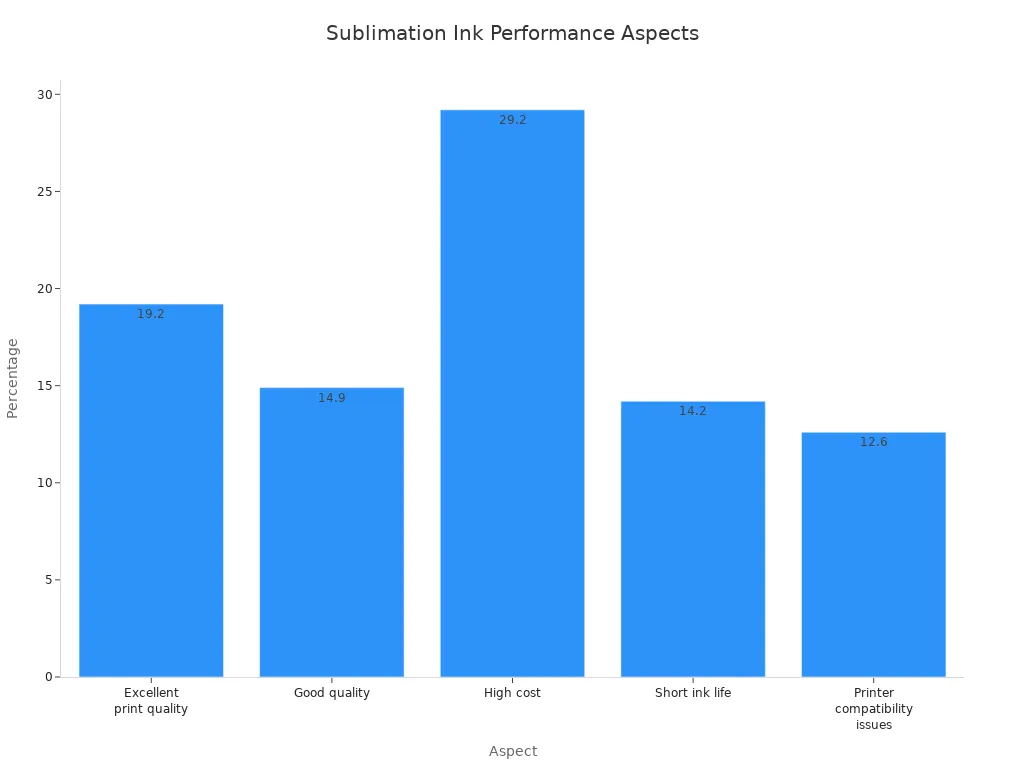
You now know how sublimation lets you create bright, lasting designs. Sublimation ink bonds with polyester, giving you excellent print durability. Research shows that 19.2% of users report excellent print quality, but 29.2% mention high cost.
Aspect | Percentage |
|---|---|
Excellent print quality | 19.2% |
Good quality | 14.9% |
High cost | 29.2% |
Short ink life | 14.2% |
Printer compatibility issues | 12.6% |
You can get the best results by using a supported printer, USA-made heat press, and brand name inks. Start your sublimation journey with these steps:
Create your design.
Print on sublimation paper.
Transfer with a heat press.
Check your finished item.
Sublimation gives you creative freedom. Try it and see your ideas come to life!
You use a heat press to apply heat and pressure to transfer your design. The heat press makes the ink turn into gas. This gas bonds with the polyester or coated surface. You cannot do sublimation without a heat press.
You cannot use sublimation ink on all products. You need polyester fabrics or polymer-coated products. Cotton and uncoated items do not work. Always check if your products say "sublimation ready" before you start.
Let your heat press cool down. Use a soft cloth to wipe away any ink or residue. For tough spots, use a little rubbing alcohol. Clean your heat press after each project to keep your products looking great.
Your design may look faded if you use the wrong temperature or time. Make sure your heat press is set to the right settings. Use only products made for sublimation. Check your transfer paper and ink for the best results.
You can make many products with sublimation and a heat press. Try t-shirts, mugs, mousepads, phone cases, banners, and tiles. You can also create custom gifts and business products. The heat press helps you make bright, lasting designs.


